Contenido del curso

Módulo 2: Gestión del alcance y aliados de un proyectos

Módulo 3: Gestión del Cronograma de un proyecto
- 11

How Project Schedule Management Works
03:02 min - 12
Dependencias entre actividades para cronogramas de proyecto
06:46 min - 13
Effort vs Duration: The PERT Method
05:49 min - 14

Ruta crítica y cronograma con diagrama de Gantt
05:58 min - 15
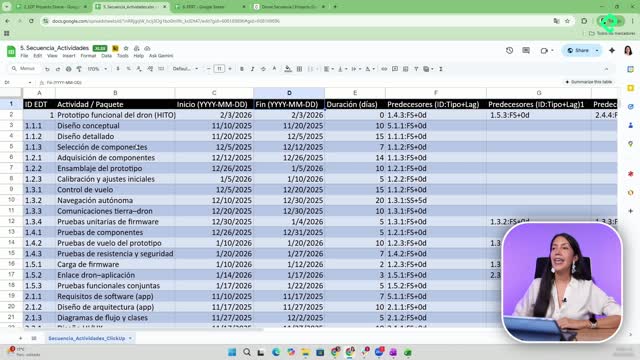
PERT and ClickUp for Project Scheduling
07:56 min - 16
Técnicas de compresión de cronogramas: fast tracking y crashing
09:03 min
Módulo 4: Planificación y Presupuesto de Costos
- 17
Gestión de costos en proyectos: procesos del PMBOK y control
04:23 min - 18
Tres métodos para estimar costos de proyectos con precisión
07:34 min - 19
Presupuestos de proyecto con reservas y curva S para control financiero
09:55 min - 20
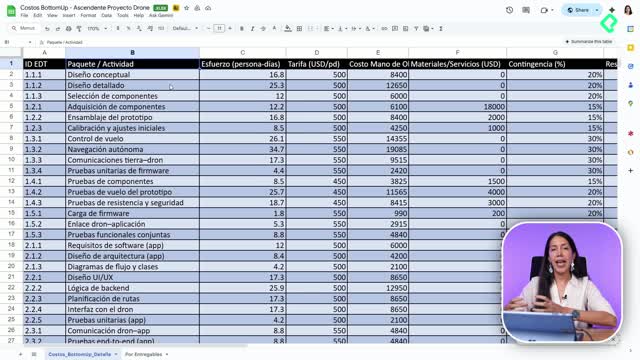
Building a Project Budget Baseline With S-Curve
07:15 min - 21
Why Low Spending Can Hide Project Failure
11:58 min - 22
WSJF and ROI to Prioritize Projects
06:58 min
Módulo 5: Siguientes Pasos
Scope Creep and How to Stop It
Resumen
Imagine your team works tirelessly and delivers a perfect product, on time and on budget, only to find out nobody needed it. The problem wasn't effort, it was working on the wrong thing. Defining project scope is the map that tells you exactly what to build and what to leave out, and it's the foundation that keeps every project from drifting.
What is project scope and why does it matter?
Project scope is the set of tangible deliverables you produce plus all the work needed to produce them. It's not just the final result, it's the road you take to get there.
The success of a scope definition depends on whether those deliverables meet clear acceptance criteria. Without that checkpoint, you can't really tell if the work is done or if it lives up to expectations.
What is project scope in simple terms? It's the list of what you'll deliver, the work required to build it, and the limits of the project. If something isn't in the scope, it isn't part of the project.
What are the building blocks of a solid scope?
Before you can draw the map, you need to understand the pieces that make it up. Each one plays a different role and skipping any of them creates blind spots later.
Deliverables, acceptance criteria, assumptions and constraints
- Deliverables: any verifiable, unique and measurable result you produce during execution. It can be a document, a prototype, a software component, a report or a specific system feature.
- Acceptance criteria: measurable, observable and specific conditions a deliverable must meet to be considered complete and correct by key stakeholders. Instead of writing a high quality app, write the app loads in under two seconds.
- Assumptions: factors taken as true for planning purposes without proof. They're the conditions you believe exist, and if any turns out false, the project can be impacted.
- Constraints: factors that limit the team's options. They can be internal, like missing resources, or external, like government regulations or a fixed budget.
Together, your objectives, deliverables, criteria, assumptions and constraints form the scope baseline, the reference you'll use for every activity and every change request.
How do I write the scope of a real project?
Let's bring this to life with the autonomous delivery drone project. You'll see how each concept turns into something concrete you can defend in front of stakeholders.
Objective, deliverables and acceptance criteria for the drone
The objective in one sentence: enable the delivery of packages up to 2 kg within a 5 km radius in under 15 minutes, with a successful mission reliability above 98%, to reduce operating costs and improve delivery times for the logistics company.
Key deliverables:
- A functional prototype of the delivery drone, meaning the hardware assembled and calibrated.
- A dispatch application for logistics operators, which is the software side.
- The drone's operations and maintenance manual, because documents are deliverables too.
- Test reports certifying the drone's safety and performance.
Acceptance criteria for the functional prototype:
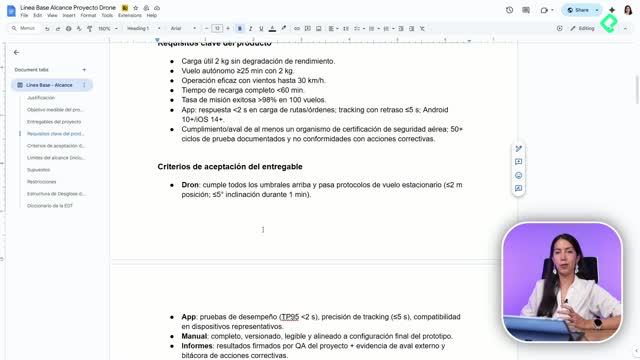
- Autonomous flight time of at least 25 minutes carrying 1.5 kg.
- Landing precision with a deviation of no more than one meter from the target point.
- Successful mission rate above 98% across 100 test flights.
- Wind resistance: able to operate efficiently with winds up to 30 km/h.
Exclusions, assumptions and constraints you should never skip
Explicit exclusions: no integration with external inventory systems (the app only manages dispatch), and no certification for flights in controlled airspace, only in permitted zones initially.
Assumptions:
- Current battery technology will be enough to reach the desired autonomy.
- Drone delivery regulations won't change drastically during the project.
- Suppliers of the electronic components needed will be available.
Constraints:
- A maximum budget of X dollars.
- A launch date for the functional prototype before March 30th of next year.
- Exclusive use of the drone's operating system for the software.
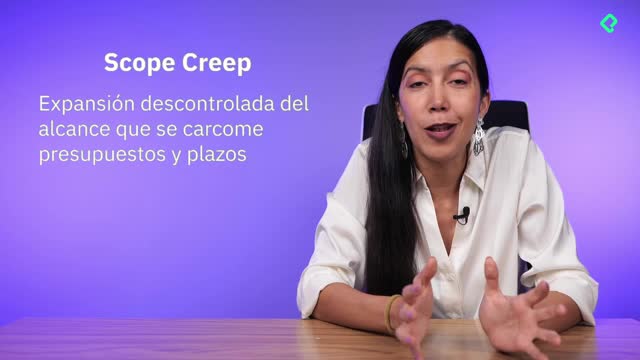
What is scope creep? It's the slow incorporation of small changes or new features into a project without proper evaluation of impact, time, cost or quality. It quietly drains your budget and timeline.
How can you avoid the most common scope mistakes?
When scope isn't clear and well documented, your team navigates without a compass and you risk burning budget on tasks that don't add value. Here's how to keep that from happening.
A practical guide to lock down your scope
- Write the project objective in a single SMART sentence: specific, measurable, realistic, relevant and time bound. Answer who gets what benefit, by when and with which metric.
- List the key deliverables in a measurable and verifiable way.
- Define between three and five clear acceptance criteria for each main deliverable.
- Write at least three assumptions you're using for planning.
- Identify the constraints that limit the project.
- Document explicitly what the project does not include.
Three mistakes show up again and again. The first is describing activities instead of deliverables: scope isn't designing the software, it's the tested functional design of the software. The second is using vague acceptance criteria like high quality instead of loads in under two seconds. The third is skipping exclusions, which matter as much as inclusions because anything left ambiguous becomes a future argument.
How do I write good acceptance criteria? Make them measurable, observable and specific. Replace adjectives like fast or reliable with numbers, percentages or time limits anyone can verify.
Your assignment: build a lightweight document with the scope of your own project. Identify the objective, list the key deliverables with their acceptance criteria, write at least three assumptions and three constraints, and save that version as your scope baseline. Share in the comments how you wrote your objective in one sentence, I'd love to read it.