Learning how to delegate tasks effectively is the difference between drowning in a to do list and leading with focus. With the Eisenhower Matrix, the Pareto Principle and a simple accountability table, you can decide what to do now, what to schedule, what to hand off and what to drop, all in one weekly review.
What is the Eisenhower Matrix and how do you use it to delegate?
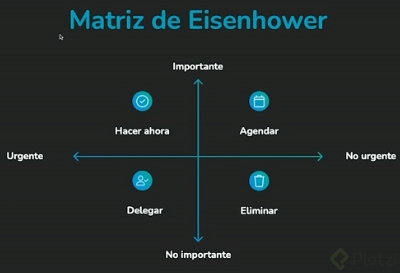
The Eisenhower Matrix is a chart with four quadrants where you sort every pending task by two questions: is it important, and is it urgent. From that simple cross, you get a clear action for each task instead of a never ending list.
What is the Eisenhower Matrix? It is a four quadrant tool that classifies tasks by importance and urgency, so you know which ones to do now, schedule, delegate or eliminate.
The trick is to be honest. If a task has been sitting on your list for weeks or even months without being done, that is a strong signal it does not really belong there. You can delete it and nothing happens.
How do you classify tasks in each quadrant?
Think of your list and place each item in one of these four buckets:
- Important and urgent: the famous bomberazos. You have to execute them today or this week, with possible support from your team, but you lead the work.
- Important and not urgent: tasks you must do as a leader, but that can wait. You schedule them, ideally using time boxing to assign a specific slot.
- Not important and urgent: tasks that must go out today or this week, but do not require you. You delegate them to your team and only review the final output.
- Not important and not urgent: pure noise. You eliminate them.
When your matrix is full of important and urgent tasks, that is a red flag. It means your planning is off, not that you are busy in a productive way.
How often should you review your task matrix?
Do this exercise at least once a week. That cadence is what keeps the urgent and important quadrant small over time, because you keep moving things into scheduled before they explode.
Imagine you start with 40 pending tasks. After running them through the matrix, you might delegate 15, schedule 10, eliminate several more and keep only a handful that truly need your attention right now. That mental decluttering is where the calm comes from.
How does the Pareto Principle help you focus as a leader?
The Pareto Principle, also known as the 80/20 rule, says that 80% of the result you want comes from only 20% of the activities you do every day. As a leader, your job is to find that 20% and protect it.
What is the Pareto Principle in productivity? It is the idea that 80% of your results come from 20% of your actions, so identifying and focusing on that small set of high impact tasks multiplies your output.
A concrete example from a business development team: the highest leverage activity is attending medical congresses. That is where the target audience and potential sponsors of the platform are physically present. Going to those events and doing networking can generate more impact than sending cold emails or making cold calls all day.
So ask yourself: which 20% of your weekly activities actually move your main goal forward? Those are the ones that should never get delegated or postponed.
How do you create accountability with the who, what, when table?
After you decide what to delegate, you need a way to make sure things actually happen. The who, what, when tool is a tiny table with three columns that creates accountability without bureaucracy.
- Who: the person responsible for the task.
- What: the specific activity to be executed.
- When: the delivery date or deadline.
What is a who, what, when table? It is a three column format used at the end of a meeting to write down who owns each action, what they will do and when they will deliver it.
Use it at the end of every interaction with your team where you agree on next steps. You say it out loud, you write it down, and you avoid the trap of long, complex minutes that nobody reads. It is a simple table that turns a verbal agreement into a clear commitment.
How do you start a mental declutter with these three tools?
Grab your current pending list and run it through the matrix. Mark which tasks are truly urgent for you, which ones you will schedule, which ones you will delegate to your team and which ones you will eliminate without guilt.
Then overlay the Pareto lens: from what is left in your important quadrants, which activities belong to that critical 20%. Close the loop with a who, what, when table for everything you delegate, so each task has an owner, a description and a date.
Which of your current pending tasks do you think you could delegate or eliminate this week? Share your example in the comments.