Concentrating critical information in a single person creates a hidden fragility in any organization. When only one human holds the keys, the credentials, or the know-how, the entire operation depends on that person showing up every single day. And that, more than a productivity issue, is a leadership and maturity problem.
What happens when only one person holds the information?
If you disappear for a week and the work stops, your project is telling you something. It is telling you that processes are not mature yet, or that decision making has been concentrated on purpose.
There are usually two reasons behind this pattern:
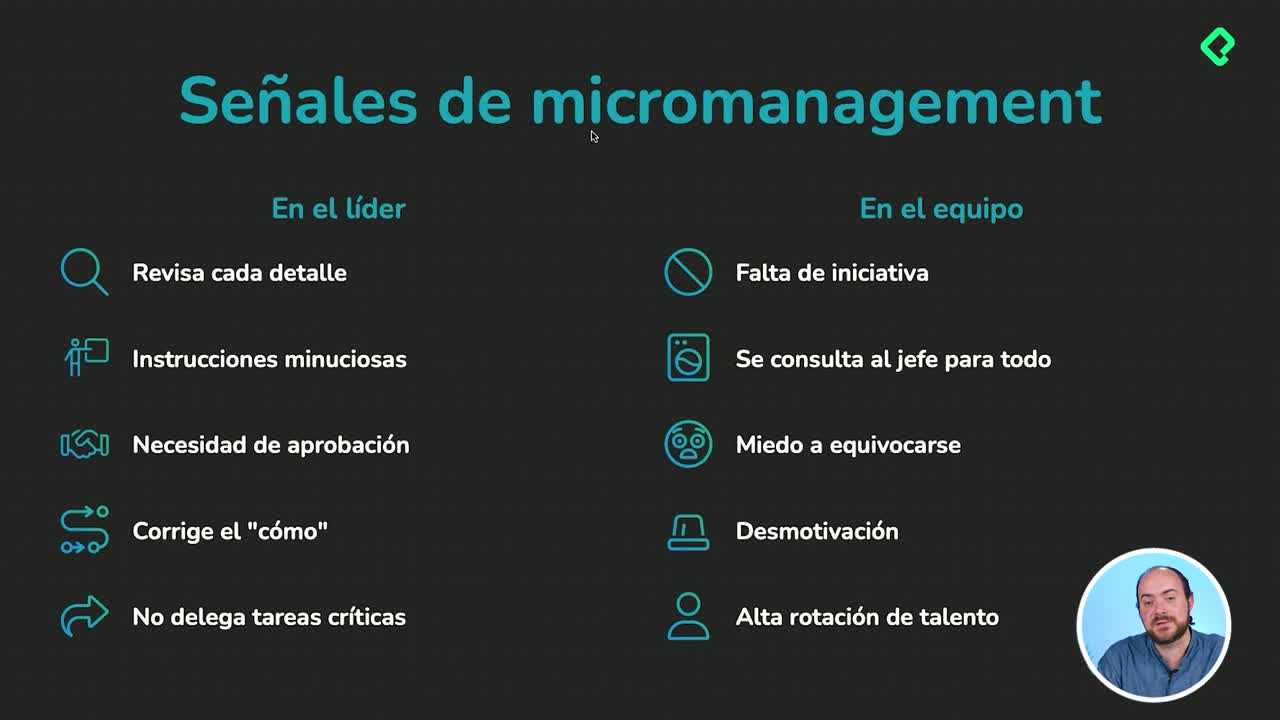
- Micromanagement, when a leader wants to keep all decision power centralized.
- Organizational immaturity, when processes are not documented or shared.
- Fear inside the team, either toward the activity itself or toward the person leading it.
When you are absent and things keep running smoothly, that is the real signal of a healthy company. Your team should not freeze because you took a day off.
What is a single point of failure in a team? It is when a process depends entirely on one person, so the moment that person is unavailable, the whole workflow breaks. It usually appears when there is no documentation or only one person has access to key credentials.
Why is the lone genius myth dangerous in startups?
In the startup world there is a romantic story that says behind every great project there is one genius who sees what nobody else sees and builds it almost alone. That story is false, and it is also harmful [2:02].
Every company depends on people and on teams. No achievement is individual, every win is collective. That is exactly why recognition matters so much: you celebrate shared wins and you use the strengths of some members to cover the weaknesses of others.
Reinforcing the lone genius myth pushes leaders to hoard information and decisions. Reinforcing the idea of team maturity does the opposite, it forces you to share, document and trust.
Why is teamwork more reliable than individual brilliance? Because organizations are built on collective effort. When responsibilities are distributed, the project survives vacations, sick days and transitions without losing momentum.
How can you avoid being a single point of failure?
If you are an entrepreneur, you will notice this challenge growing as your company grows. More people, more teams, and suddenly you are still the only one who can do certain tasks because you are the only one with the credentials or the context. There are three concrete practices that work [3:48].
Document your critical processes with clear guidelines
Writing things down is the cheapest insurance you can buy for your operation. In well structured organizations this takes the form of lineamientos, simple internal documents that explain how a critical process must be executed and what the rules of the game are in that specific situation.
Good documentation should include:
- The purpose of the process and when it applies.
- The steps to execute it from start to finish.
- The rules, limits and people involved in each decision.
The goal is not to write a novel, it is to make sure that anyone who reads the document can run the process without you in the room.
Use shadowing to transfer knowledge to new members
Shadowing means that a new team member spends their first months close to you, watching how you actually perform each activity. They observe the real version of the work, not the polished one.
During shadowing you also share the existing documentation, answer questions in real time and act as a coach. This gives the new member confidence so that, in the near future, they can run the process independently without fear.
Apply mentoring through one on one sessions
Mentoring is more focused than shadowing. You schedule one on one sessions with a specific team member to walk them through a process, explain the why behind every step and resolve doubts.
The purpose is to give that person tranquilidad, the calm certainty that they can take over the activity when you are not available. Mentoring works especially well for processes that require judgment, not only execution.
How do you know if your project has real maturity?
A simple test: take a few days off and observe what happens. If the team keeps moving, decisions keep being made and clients keep being served, your organization has reached a healthy level of maturity.
If everything stops, you have a single point of failure problem and probably a documentation gap. The fix is not working harder, the fix is transferring knowledge.
For your journal, think about one activity that today only you can perform inside your team. Then ask yourself who could help you carry it out when you are not there, even during vacations. Write down the name and the first step you would take to start sharing that responsibility.
Which task are you ready to start delegating this week? Share it in the comments and tell us who you would trust to take it over.