Giving constructive feedback is one of the most powerful tools a leader has, and the SBI model (Situation, Behavior, Impact) makes it simple to deliver feedback that strengthens your team without sounding like a threat. If you're leading people and want your message to land, this approach helps you communicate clearly, reinforce strengths, and address areas of improvement with respect.
What is the SBI feedback model and how does it work?
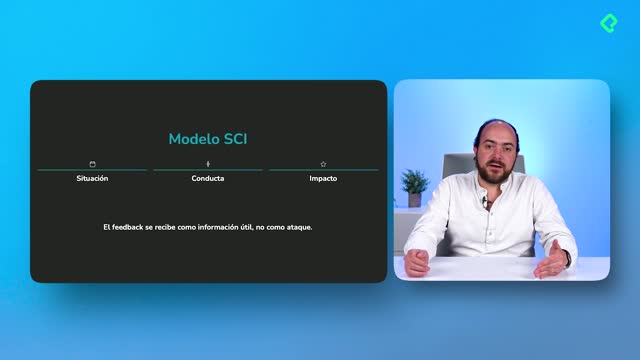
The SBI model breaks feedback into three parts that give your message structure and clarity. Instead of throwing vague comments, you anchor what you say to a specific moment, a specific action, and a specific consequence.
- Situation: describe where you were, what was happening, and who was there. Example: we were in a meeting on Monday morning.
- Behavior: explain what happened, what was right or wrong. Example: during that Monday meeting, you interrupted your coworker three times.
- Impact: connect that behavior to its effect on the team. Example: because of those interruptions, she couldn't express her point and there was no real dialogue.
When you frame feedback this way, your message stops feeling personal and starts feeling actionable.
What is the SBI feedback model? It's a method to deliver feedback in three steps: describe the Situation, point out the specific Behavior, and explain the Impact it had. It keeps feedback factual instead of emotional.
How do I prepare feedback before the conversation?
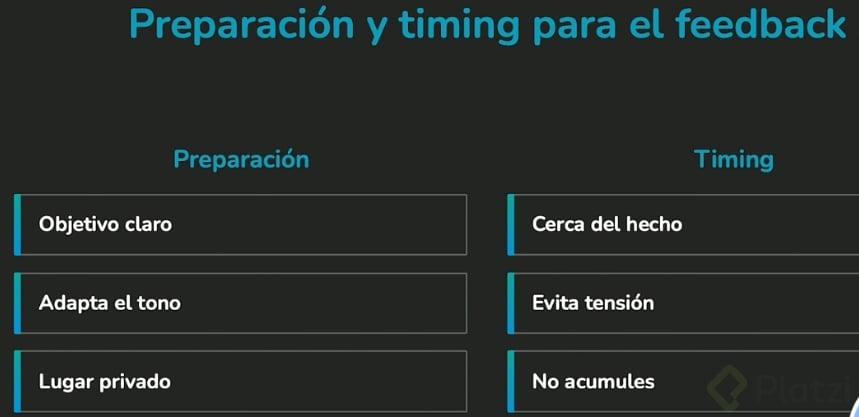
Good feedback isn't improvised. Before you sit down with someone, get clear on what you want to achieve and what you actually need to communicate.
Adapt your tone to the message. A thank you or a celebration sounds warm, friendly, even fun. A correction about a behavior that shouldn't repeat needs a firmer, more serious tone. The location matters too: praise in public, correct in private. When you celebrate someone openly, you reinforce trust. When you address a mistake, do it in a space where no other team members are watching.
When is the right timing to give feedback?
One of the biggest myths in organizations is that feedback only belongs in formal moments like the monthly, quarterly, or annual review. Don't wait that long.
Give feedback close to the event. Not necessarily on the spot in front of the whole team, but maybe right after the meeting, pulling the person aside for a quick chat. If you wait, the moment loses context, and you might even forget feedback that could have helped someone grow or felt great to receive.
When should I give feedback to my team? As close to the event as possible, never weeks later. Pull the person aside privately right after the situation happens.
How do I create a safe space for feedback?
For feedback to actually work, the environment has to feel safe for both sides. That starts with how you speak and how you listen.
- Stick to facts and evidence. Don't disqualify the person or attack their personality.
- Share your point of view, but ask for theirs too. Their perspective matters as much as yours.
- Speak with care and respect. The moment respect breaks, the conversation goes nowhere.
- Close with an action plan and a verbal commitment, ideally written down too.
And remember the leader's job doesn't end there. Follow up on the agreement. That's what turns feedback into real change.
What are the most common feedback mistakes leaders make?
Even with good intentions, there are traps that ruin a feedback conversation. Avoiding them is half the work.
- Labeling: saying things like you're a lazy person attacks identity instead of behavior. You won't get anywhere.
- Judging: when someone feels judged, they get defensive, and a defensive person can't reach an agreement with you.
- Generalizing: dropping phrases like you always arrive late when it actually happened twice ridicules the other person and kills credibility.
- Public criticism: giving constructive feedback in front of peers humiliates the person and erodes their trust over time.
These habits feel small but they shut down the conversation before it even starts.
Why does feedback need to flow both ways?
Feedback isn't a one way street. As a leader you give it, but you also need to receive it from your team with the same openness, respect, and care you expect from them.
A practical exercise that works at the company or team level is the 360 degree evaluation. In this format, your boss, your team, your peers, and you yourself all participate in the assessment. The self evaluation piece adds an introspective layer that helps you grow as a leader, while the multiple perspectives reveal blind spots you couldn't see alone.
Now take this to your 30 day journal: plan how you'll deliver feedback to a teammate or even to your boss using the Situation, Behavior, Impact model. Write the situation, the specific behavior, and the impact before the conversation happens. Have you tried the SBI model in your team yet? Share how it went in the comments.