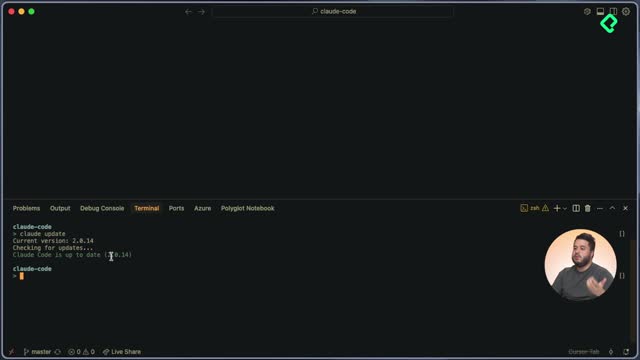
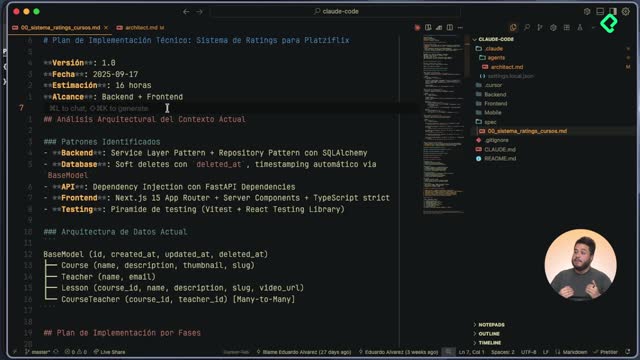
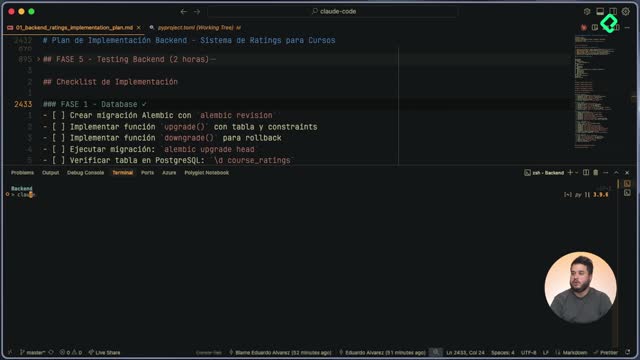
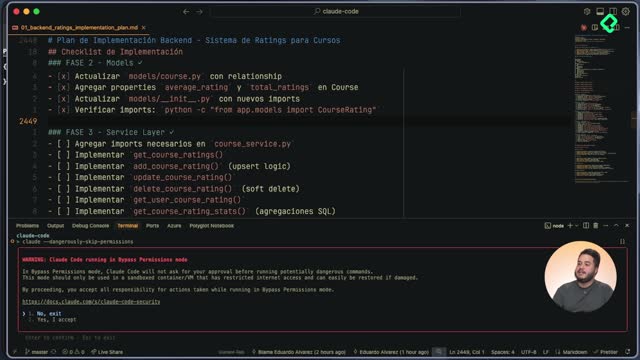
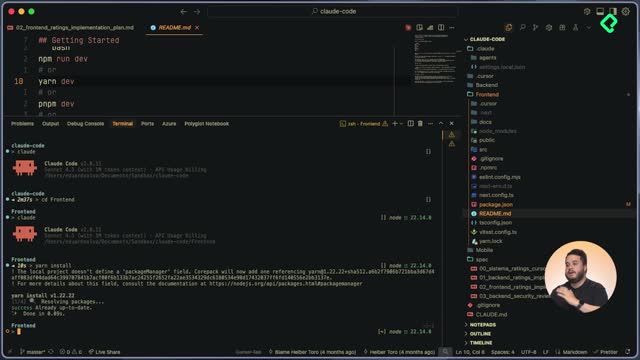
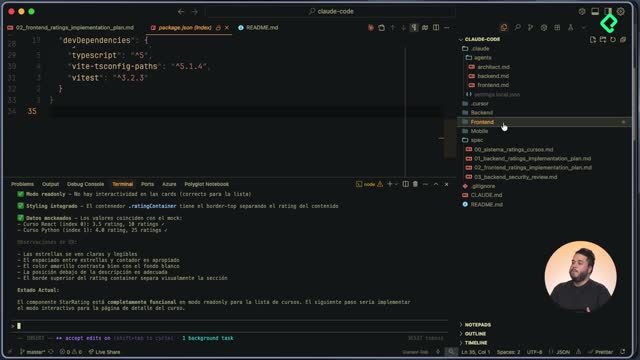
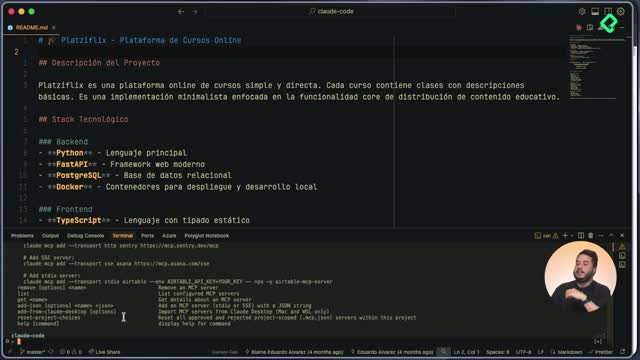
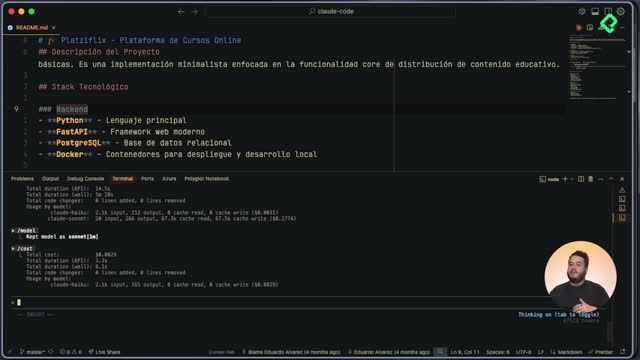
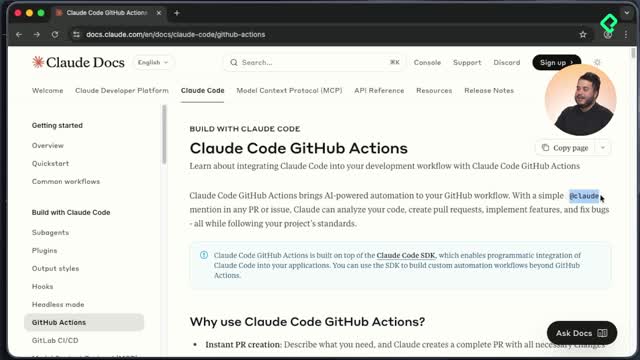
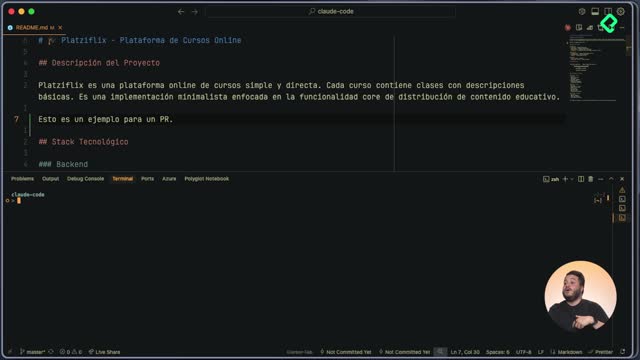
Every developer knows the loop: open the editor, search for files, write, break, fix. Again and again. Claude Code changes that loop from the root because it doesn't autocomplete code for you. It reads your entire project, connects files, understands context, and proposes solutions aligned with your existing architecture. You won't memorize commands here. You'll learn to develop by conversing with intention, criteria, and an intelligence that understands your project end to end.
What will you build with Claude Code in this course?
You'll join the Platzi Flicks team, an online course platform, with one mission: ship a one-to-five star rating system for courses. A real feature, in a real stack, with real decisions behind every line.
The project runs on a modern setup that mirrors what you'd find in production teams:
- Backend with FastAPI to expose the rating endpoints.
- Frontend with Next.js to render the star UI and handle interactions.
- Database with PostgreSQL to persist ratings and relationships.
You won't code in isolation. You'll build by talking to Claude, which executes, validates, and tests each change as the conversation evolves.
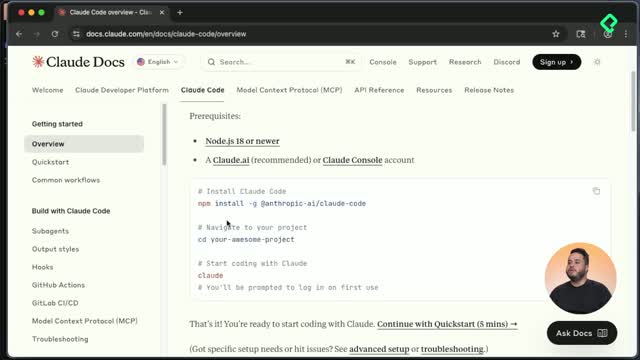
What is Claude Code? It's an AI development tool that analyzes your full project, understands its architecture, and collaborates with you through conversation instead of autocompleting isolated lines.
How is conversational development different from autocomplete?
Most AI tools predict the next token. Claude Code reads the room. It looks at your folder structure, your imports, your conventions, and proposes changes that fit the project you already have, not a generic snippet pulled from somewhere else.
That shift matters because the bottleneck in software was never typing speed. It was understanding. When the tool understands your codebase, every suggestion becomes a discussion about why, not just what.
You'll also integrate the rest of the workflow without leaving the conversation:
- GitHub for version control and collaboration.
- Testing to validate behavior before merging.
- Performance reviews to keep the feature responsive.
- Security checks to protect user data and endpoints.
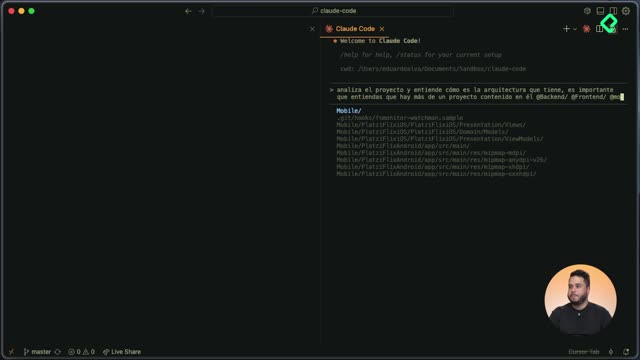
How does Claude Code handle context? It scans the full project, links related files, and uses your existing architecture as the reference for any new code it proposes.
Why does thinking before coding matter more than writing faster?
Most AI courses promise speed. This one trains judgment. You won't collect prompts like recipes. You'll practice decisions, and every decision starts with analysis instead of improvisation.
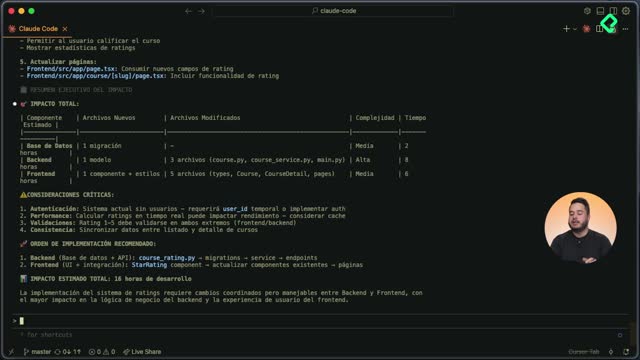
The deliverable at the end is a complete feature: database model, API, UI, tests, and validations. But the real outcome is a new way of working, where you lead the architecture and Claude handles the execution.
Do I need to memorize prompts to use Claude Code? No. You learn to make decisions and describe intent. The tool adapts to your project, so the skill is reasoning, not reciting commands.
The future of development doesn't belong to whoever types the most code. It belongs to whoever thinks the code through before writing it. Claude Code doesn't just speed up your work, it raises the bar of what you ship. Tell me in the comments: what feature would you love to build by conversing with your codebase?