Software development stopped being a solo task. With conversational development powered by Claude Code, you analyze first, plan with full context, and then implement with continuous validation. This shift matters for any developer who wants to ship better code, not just more code.
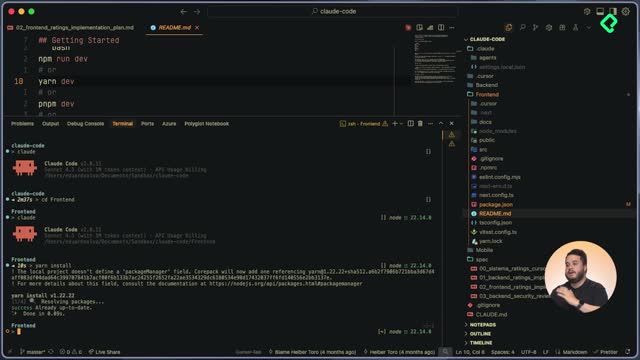
Throughout the Platzi Flix project, you built a complete rating system: database models, API endpoints, and UI components. You also connected Claude Code to GitHub and learned to operate inside Docker containers. The real takeaway, though, is the methodology you can now reuse on any codebase.
What does conversational development with Claude Code mean?
It means you stop writing line by line in isolation and start working with a tool that understands the whole project, not just the open file.
What is conversational development? It's a workflow where you analyze, plan, and implement code in dialogue with an AI tool that has full project context, validating each step before moving forward.
For decades, your only collaborators were Stack Overflow and technical docs. Now you can ask Claude Code to evaluate the impact of a change across the entire application before you touch a single line. That depth of analysis is the real shift, not raw speed.
How did you apply it on Platzi Flix?
You followed three clear phases, and each one used Claude Code differently.
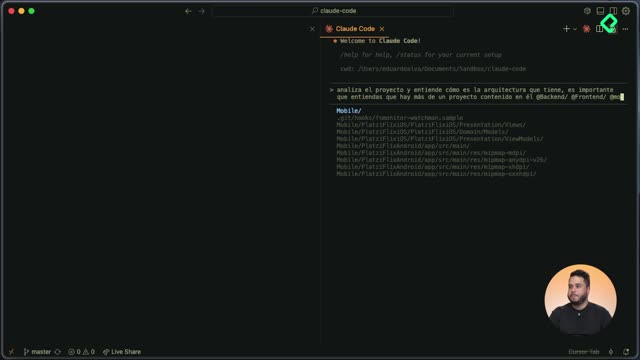
- Codebase discovery. You explored an existing project through cross file references, architecture analysis, and pattern identification, instead of reading files at random for days.
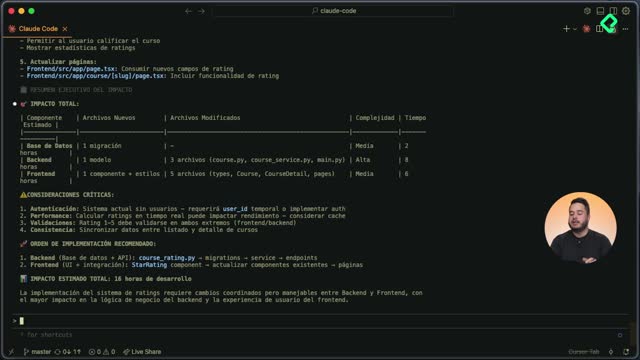
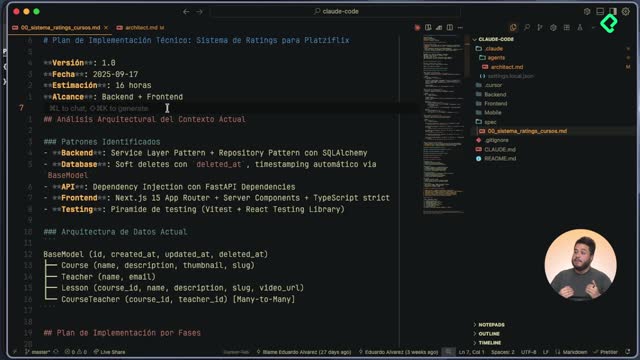
- Deep analysis of the rating system. You used Think Deeply and specialized agents to design the solution before writing code, weighing impact on database, API, and frontend, plus risks and dependencies.
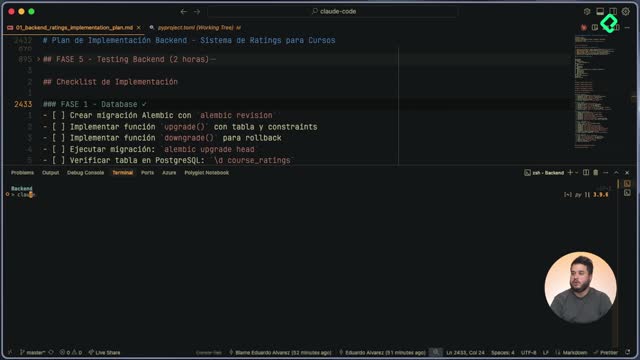
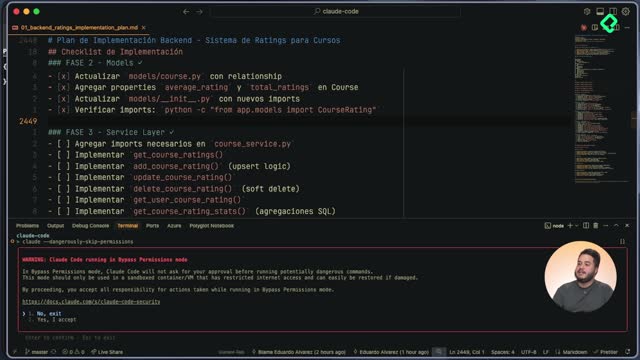
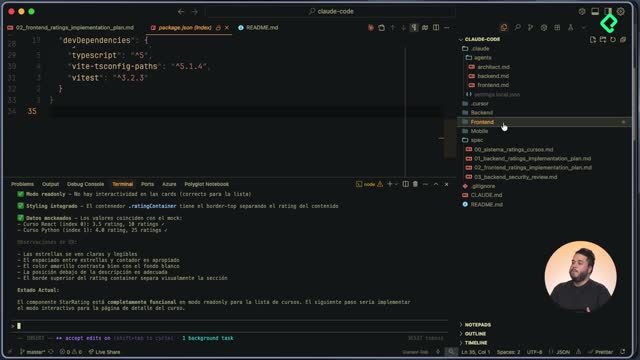
- Backend and frontend implementation. You built models, migrations, and endpoints, ran commands inside Docker containers, validated with unit tests, and then created reusable components with proper loading and error states connected to the API.
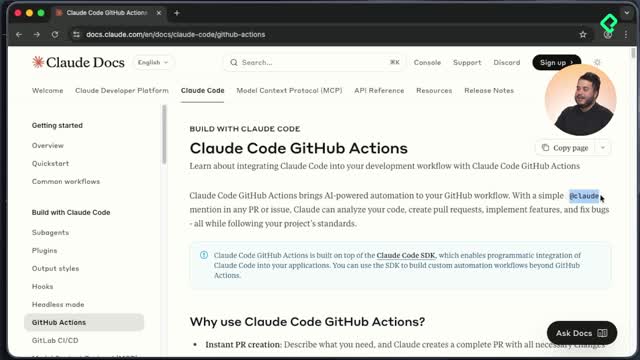
After that, you set up collaboration workflows by integrating Claude Code with GitHub for issues and pull requests, so technical and non technical teammates could work from the same tool.
Why does Claude Code amplify your judgment instead of replacing it?
Because the value sits in the conversation between your experience and the model's capabilities. You stay in charge of every decision that matters.
Does Claude Code replace developers? No. It generates options, runs changes, and surfaces potential problems, but you decide what to implement, validate what makes sense, and prioritize what to fix.
Think of it as a loop. Claude proposes refactorings based on existing architecture, writes tests for edge cases you hadn't considered, and flags inconsistent patterns in the codebase. You bring the technical criteria that decides which suggestions actually fit the product.
What skills carry over to any future tool?
The methodology outlives the specific tool. Analyze, plan, execute, and validate works with or without AI, and these habits travel with you:
- Structure your thinking clearly before asking for code.
- Break problems down systematically and map dependencies first.
- Validate solutions continuously with tests and review, not at the end.
That is why conversational development is not really about talking to a machine. It is about training yourself to reason out loud, in writing, with enough context that any collaborator, human or AI, can follow you.
What can you do next with this methodology?
Take it to real projects and let it evolve with your team. The tools will keep changing, but the workflow you practiced here is portable.
Apply Claude Code to a current repo and start with discovery before touching code. Share the workflow with your teammates so issues and pull requests become a shared conversation. Iterate on what works and drop what doesn't, the same way you iterated on the rating feature.
Which part of the workflow are you planning to try first on your own project? Drop your plan in the comments and tell us where you want to start.