Contenido del curso

SEO and Narrative Structure
Strategic Networking
Content Creation and Engagement

Job Search Tactics
How to Show Results in LinkedIn Experience
Resumen
Describing what you do is not the same as explaining the value you bring. That difference decides whether a recruiter messages you on LinkedIn or scrolls past your profile. The LinkedIn experience section is where you turn tasks into results, and results into opportunities, no matter your industry or seniority level.
Why does the experience section matter on LinkedIn?
This section is your professional showcase. It tells recruiters, leaders, media, and educational institutions what you have actually achieved with your skills and competencies.
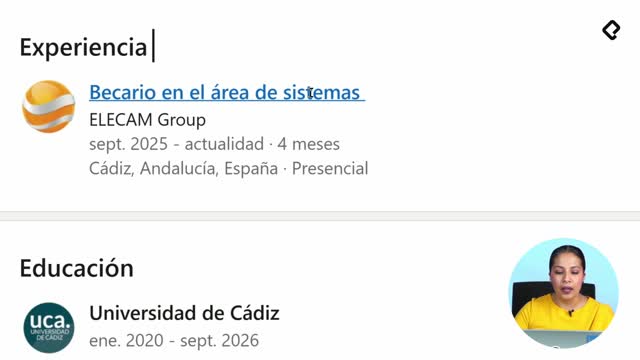
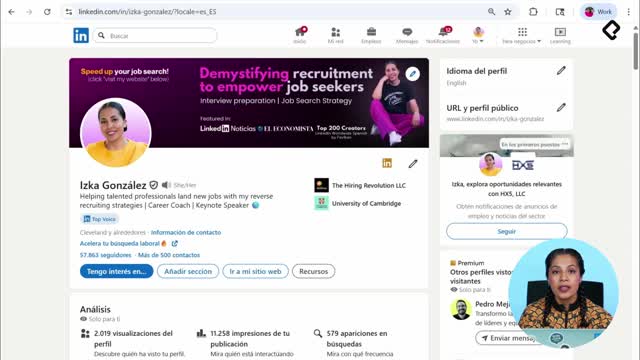
LinkedIn organizes your experience similar to a résumé: company name, job title, time in the role, and a description. The most recent role appears first, which mirrors how human memory works and how recruiters scan profiles.
When you hover over the job title field, LinkedIn suggests predetermined titles pulled from millions of profiles worldwide. Use them. If your internal title is Engineer AB but the market searches for Developer, pick the searchable one. Visibility depends on the words other people are typing.
What is the best job title to use on LinkedIn? Pick the suggested title that best matches your real responsibilities and is commonly searched in your industry. Internal titles often hide your profile from recruiters.
How do I turn tasks into results using the CAR technique?
Most profiles list activities. Strong profiles show outcomes. The CAR technique (Context, Action, Result) gives you a simple structure to do that.
- Context: where you work, your role, your objective. A salesperson closes contracts to grow revenue. A buyer finds the best supplier to generate savings. Define your goal first.
- Action: what you did day to day. This is where action verbs earn their place: developed, coordinated, implemented, analyzed, led, contacted.
- Result: what you obtained, in what timeframe, and how it impacted the organization.
Many people freeze at the result step because they think they have no metrics. You probably do. Imagine a delivery driver on a rapid logistics app: stars, daily trips, customer reviews. All measurable. Of 100 daily customers, I maintained a 100% five-star rating. That is a result.
A logo also works for an intern. Instead of writing Systems intern, you could write: Analyzed market research results from 20 countries using software X. Same role, far more value communicated.
What is a KPI on LinkedIn experience? A KPI is a key performance indicator, a measurable target tied to your role. Sales closed, savings generated, processes automated, hiring time reduced. Use them to anchor your results.
What counts as an achievement?
Many people feel pressure to list only extraordinary wins. An achievement is simply reaching a goal you or your company set. If you hit your target, that is a logro worth writing down.
If your company is small or family run and has no formal KPIs, build your own framework. Ask yourself: what is my objective, what do I do to reach it, and what changed because of my work?
How should senior profiles describe their experience?
The more senior you are, the harder it gets to summarize. A vice president of content has interacted with countless teams, solved complex problems, and delivered across regions. Listing eight bullet points of activities is not enough.
Look at this real example: Negotiated strategic alliances with media groups. Strong verb, weak result. A recruiter immediately asks:
- How many alliances?
- In which region?
- What did they represent for the company in revenue or reach?
- Which monetization opportunities did they unlock?
Those questions in parentheses are the ones a reclutador silently asks while reading your profile. Answer them in advance.
What questions should I ask myself before writing each bullet?
Use this checklist for every line in your experience:
- What was the situation or scope when I started.
- What specific action did I take, and with which tools or teams.
- What measurable outcome did it produce.
- How did that outcome impact revenue, savings, efficiency, or reach.
When you answer those four questions, you stop listing activities and start showing professional value. That is what makes a recruiter pause, read, and reach out.
Now your turn: pick one achievement from your current or past role and rewrite it using CAR. Drop it in the comments so we can see your value in action.