Contenido del curso

SEO and Narrative Structure
Strategic Networking
Content Creation and Engagement
Job Search Tactics
How to Write a LinkedIn About That Gets Clicks
Resumen
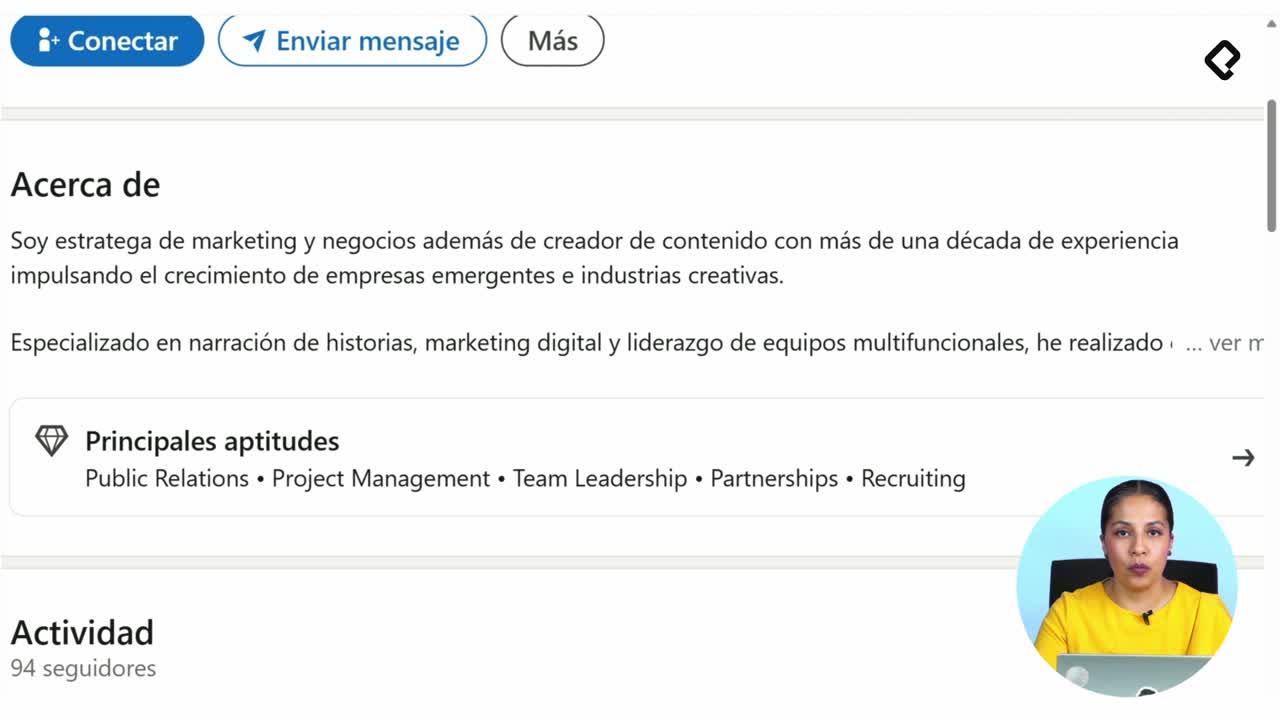
Your LinkedIn About section gives you 2,600 characters to introduce yourself, but only the first 200 to 250 are visible before someone clicks "see more." Those two opening lines decide whether a recruiter, client or peer keeps reading or scrolls away. If you haven't optimized this part of your profile yet, you can do it right now using the examples and structure below.
What is the LinkedIn About section and why does it matter?
Think of it as the moment after the handshake. You already greeted the person with your headline and photo, and now you get to explain who you are, what you do, how you do it, who you help and in which industry. Anyone scrolling down to this block already wants to know more about you, so this is not the place to be vague.
What is the LinkedIn About section? It's the introductory block on your profile, with up to 2,600 characters, where you expand on your professional identity. Only the first 200 to 250 characters appear before the "see more" cut, so those lines carry the most weight.
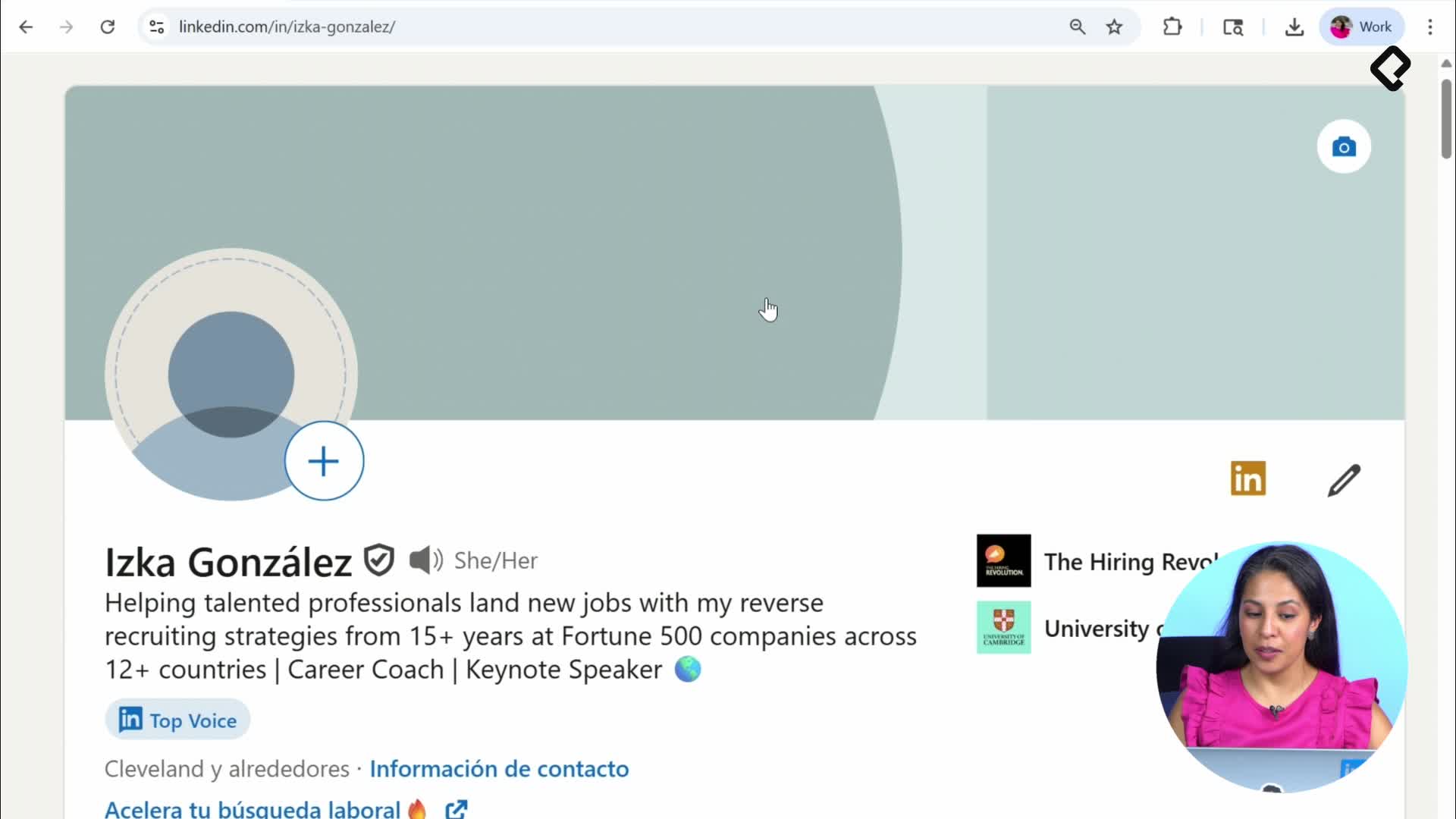
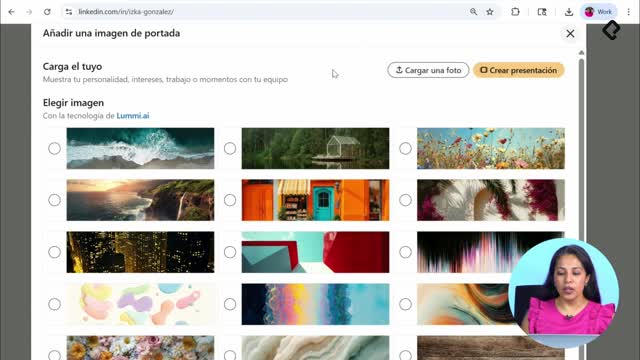
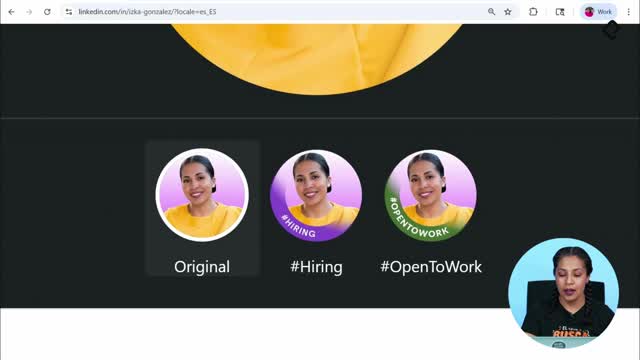
There isn't a single correct format. Some profiles use storytelling, others use a clean list of skills. Both work. What matters is that every section connects: banner, photo, headline and About should tell the same story [01:08].
How do top LinkedIn profiles use storytelling in their About?
Let's look at how real profiles handle this space and what you can borrow from each one.
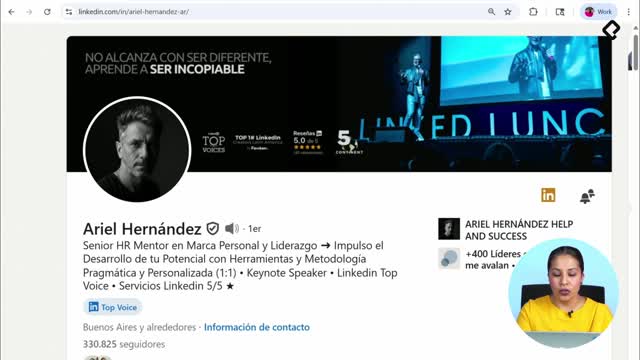
Ariel Hernández: an invitation to keep reading
Ariel opens with a line that speaks directly to the visitor: "Si estás aquí es porque quieres conocer un poco más de mí y de lo que hago" [02:14]. Then he drops a quote he loves from Miguel de Unamuno: "No estoy vendiendo pan, estoy vendiendo levadura". From there, he lists the pain points his audience usually has, like lack of clarity in communication or not knowing how to take action, and closes with his contact info. That's storytelling in practice: a hook, a personal voice, the problem he solves and a clear call to action.
Frida Ru: bilingual voice and a smart disclaimer
Frida starts her About with "Opinions are my own" [03:10]. If you currently work for a company, this kind of disclaimer matters. Super pro tip: read your employer's social media policy before posting actively on LinkedIn, so you know what you can and can't share. After that, she mixes Spanish and English to describe her process: from idea conception to strategy, development, sales, reporting and "repeat on and on again until succeed". She closes with a more traditional list of skills.
How should I write my About if I'm open to work?
Here's where many profiles lose opportunities. The example reviewed in class is a Quality Engineer marked as open to work, but the headline only says "Ingeniero de Calidad" with no specialty or industry [05:02]. The more specific you are, the easier it is to be found. If you work in automotive, say it: Quality Engineer, Automotive Industry.
Should I include my age or years of experience in my LinkedIn About? No. Stating your age or leading with "X years of experience" pushes the focus toward time instead of results. Lead with your specialty, your industry and the value you bring.
In Latin America especially, there's a habit of positioning yourself as an expert based on how many years you've spent in a role. That dedication is real and valid, but for senior profiles, the years already speak for themselves. Worse, opening with your age can trigger ageism, a bias that exists in many hiring processes [06:20].
What to write instead of "I have X years of experience"
Replace age and tenure with concrete information about your craft:
- Your specialty, written in plain language.
- The industry or industries where you operate.
- The kind of problems you solve or results you deliver.
- A personal line that shows curiosity or motivation.
- What you're looking for or the service you offer.
So instead of "Tengo 30 años, soy ingeniero industrial...", you can write: "Soy ingeniero industrial y de sistemas, orientado a la calidad, producción y procesos en la industria automotriz. Me entusiasma aprender conceptos nuevos y aplicarlos para mejorar líneas de producción."
Is the About the same as the old resume "professional objective"?
Not anymore. The old objetivo profesional line on a printed resume is outdated. Today, your About should answer in two quick lines who you are, what you do and how you do it, plus what you're looking for or what service you offer [07:48]. The deeper objective and career goals are better saved for the interview itself.
What should the first two lines of my LinkedIn About say? They should clearly state your role, your specialty and the value you bring, written in natural language with keywords your audience would search for.
Now it's your turn. Drop in the comments, in 30 words or less, who you are, what you do and how you do it. That's your About in its purest form. If you need help drafting or editing it, there's a prompt in the resources section ready for you to use.