Dado el caso de negocio Salud Tech:
i.Define los criterios de aceptación para las 3 historias de usuario previamente creadas en la clase anterior.
Identifica de 3 a 5 criterios de aceptación por cada historia de usuario
Historia 1: Registro e Inicio de Sesión Seguro
# Criterio de Aceptación Tipo Verificación
1 El usuario recibe un correo de verificación dentro de los 60 segundos posteriores al registro completo Funcional Test automatizado de tiempo de envío
2 El sistema rechaza correos electrónicos inválidos o ya registrados con mensaje claro de error Seguridad UX Prueba de edge cases con correos duplicados
3 La autenticación de dos factores (2FA) se activa obligatoriamente para roles de médicos Seguridad Escaneo de configuración de seguridad
4 Las contraseñas se almacenan solo como hash (no texto plano) usando algoritmo bcrypt ≥12 rounds Consistencia Datos/Auditoría Revisión de código backend
5 Tras 3 intentos fallidos, la cuenta se bloquea temporalmente por 15 minutos (protección fuerza bruta) Seguridad Simulación de ataques en testing
Historia 2: Configuración de Disponibilidad Horaria (Médico)
# Criterio de Aceptación Tipo Verificación
6 El médico puede configurar bloques horarios mínimos de 15 minutos hasta máximos de 4 horas continuas Funcional Validación UI + backend
7 Cuando un paciente reserva, el espacio disponible desaparece inmediatamente en el calendario público (sincronización ≤1 segundo) Consistencia Datos Testing de concurrencia simulada
8 El médico puede cancelar disponibilidad previa con notificación automática a pacientes citados con 24h mínimo de anticipación Legal/UX Flujo completo de cancelación
9 Los cambios de disponibilidad se registran en log con timestamp, ID de usuario y acción realizada (auditoría) Seguridad/Auditoría Revisión de logs en staging
10 No es posible establecer citas en días festivos predefinidos por la institución médica Regla de Negocio Prueba con calendario institucional
Historia 3: Solicitar y Agendar Nueva Cita (Paciente)
# Criterio de Aceptación Tipo Verificación
11 El paciente puede buscar citas filtrando por especialidad, ubicación y ventana máxima de 7 días Funcional Buscador con múltiples filtros activos
12 Al confirmar cita, el paciente recibe confirmación inmediata por email Y SMS (ambos canales) Usabilidad/Valor Prueba en ambiente con senders configurados
13 El sistema impide doble reserva (mismo horario, mismo médico) mediante validación transaccional atómica Consistencia Datos Test de concurrencia de reservas simultáneas
14 El paciente puede cancelar sin penalización hasta 24 horas antes de la cita programada Política Servicio Flujo de cancelación funcional
15 Toda transacción de cita genera un ID único y trazable para auditoría y reclamos del paciente Seguridad/Compliance Verificación de base de datos de citas
ii.¿Cuál sería la Definición de Terminado inicial para el equipo Salud Tech?
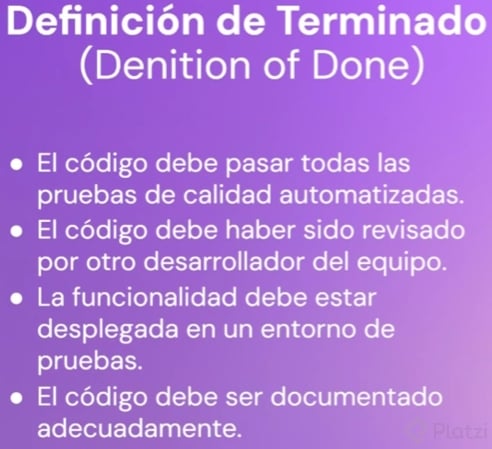
La DoD es la checklist de calidad que todas las historias deben cumplir para considerarse "Terminadas". Para equipos de salud tech, los estándares son altos por regulaciones:
Fase Criterio de DoD Responsable
Desarrollo Código escrito siguiendo estándares de codificación del equipo Developer
Revisión Pull Request aprobado por al menos 1 desarrollador senior Reviewer
Testing Tests unitarios con cobertura mínima del 80% en funcionalidades críticas QA/Developer
Integración Build pasa sin errores en pipeline CI/CD DevOps
Seguridad Escaneo SAST/DAST limpio (sin vulnerabilidades High/Critical) Security
Datos Migraciones de BD probadas en ambiente staging primero Developer
Documentación API documentada en Swagger/OpenAPI si corresponde Developer
Accesibilidad Cumple WCAG 2.1 AA (crítico para sector salud inclusivo) UX/QA
Cumplimiento Revisión legal/privacidad aprobada para manejo de datos sensibles Compliance
Deploy Desplegado exitosamente en ambiente de producción DevOps
Dado tu Proyecto personal:
i.Haz lo mismo para tu proyecto personal
i. Criterios de Aceptación Detallados (3-5 por Historia)
Historia 1: La Narrativa Inmersiva (Lore System)
# Criterio de Aceptación Tipo Verificación
1 El sistema muestra fragmentos narrativos de <15 segundos durante cargas de nivel Funcional Medición de tiempo de exposición
2 La narrativa avanza secuencialmente solo tras completar objetivos del juego (sin saltos arbitrarios) Consistencia Datos Log de progreso de jugador
3 El progreso de lore se guarda en cloud y se sincroniza entre dispositivos en ≤5 segundos Consistencia Datos Sync test entre móvil/tablet
4 Cuenta de usuario autenticada segura (token JWT expirable cada 24h) para proteger progreso Seguridad Penetration testing básico
5 El contenido narrativo no contiene referencias protegidas por copyright sin licencia Legal/IP Revisión manual de assets
Historia 2: Identidad Visual Rápida (Personajes/Sprites)
# Criterio de Aceptación Tipo Verificación
6 Sprites diferenciables visualmente en resolución mínima de 720p (paleta de colores única por jugador) Usabilidad Prueba con monitores estándar
7 Sistema de elección de skin se guarda asociado al usuario (persistencia de preferencias) Consistencia Datos DB audit de preferencias guardadas
8 Assets de sprites pasan validación antivirus antes de ser descargados al cliente Seguridad Escaneo en pipeline de build
9 Tamaño de archivo de sprite por personaje ≤10KB para carga rápida en móviles Rendimiento Auditoría de assets
10 Animaciones básicas (camina, salta, ataca) funcionan correctamente en todos los skins disponibles Calidad Juego QA manual + auto-test
Historia 3: Exploración Ágil de Mundos (Mapas/Niveles)
# Criterio de Aceptación Tipo Verificación
11 Tiempo de carga total del nivel ≤3 segundos en dispositivo móvil gama media Rendimiento/Valor Benchmark en Android/iOS real
12 Posiciones de jugadores sincronizadas con latencia ≤100ms entre participantes Consistencia Datos Test de red simulada
13 Autenticación de sesión requerida para acceso a servidores multijugador Seguridad Intento de acceso sin login bloqueado
14 Cada nivel tiene objetivo principal identificable en ≤30 segundos de gameplay Usabilidad/Valor Playtest con usuarios beta
15 Anti-cheat básico previene manipulación de posición/habilidad visible en servidor Seguridad Scan de memoria client-side
ii. Definición de Terminado (DoD) - Equipo Proyecto Personal
Para un proyecto personal/grupal universitario, la DoD puede ser más práctica pero igual rigorosa:
Fase Criterio de DoD Responsable
Gameplay Mecánica funciona en flujo completo sin bloqueos ni bugs crasheantes Developer/Programmer
Gráficos Todos los assets visibles se renderizan correctamente en pantalla objetivo Artist/Dev
Audio Música y efectos de sonido activan/desactivan según contexto de juego Designer
Testing Pasó prueba de "jugabilidad" con al menos 3 personas fuera del equipo QA/Todos
Rendimiento FPS estable ≥30 en dispositivos objetivo (móvil/computadora) Developer
Red Multijugador estable en conexión WiFi doméstica promedio Network Dev
Contenido Story/Lore entregado en formato editable (no hardcodeado) Designer/Writer
Deploy Build ejecutable empaquetado listo para distribución Developer
Backup Repositorio Git actualizado con versionado semántico Todos
Documentación README con instrucciones de instalación y controladores básicos Todos