The Scrum Master is the change agent who makes sure Scrum actually works inside a team. If you've ever wondered how Scrum gets implemented correctly, who removes blockers, and who coaches the team toward independence, this role is the answer. It matters for anyone working in agile teams, product development, or organizational transformation.
Scrum looks simple on paper, and that's exactly why it spreads across so many industries. But simple doesn't mean easy. The real question is whether you're implementing it the right way, and that's where the Scrum Master steps in as a coach, guide, and mentor focused on the how, not the what.
What is a Scrum Master and why does the role exist?
The Scrum Master serves the team and the organization, ensuring Scrum is adopted correctly and that the team becomes more independent over time.
What is a Scrum Master in simple terms? A Scrum Master is a servant leader who coaches the team, the Product Owner, and the organization to apply Scrum effectively. The focus is on process, collaboration, and continuous improvement, not on assigning tasks.
Think of this role less as a manager and more as a catalyst. The Scrum Master doesn't tell people what to build. Instead, helps the team find its own way to deliver value, sprint after sprint.
What are the responsibilities of a Scrum Master?
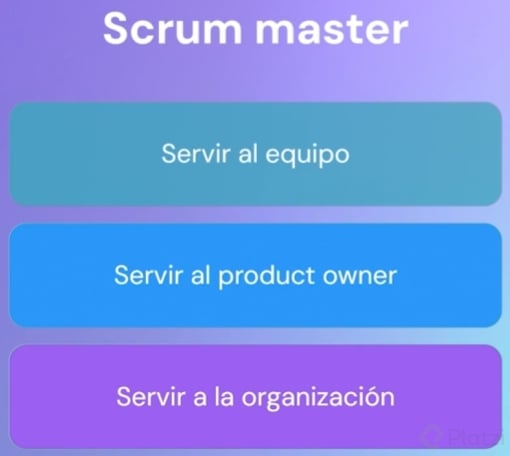
The responsibilities split into three directions, and each one shapes how the Scrum Master shows up day to day.
- Service to the team. Helps members become self managed and cross functional, while making sure value gets delivered.
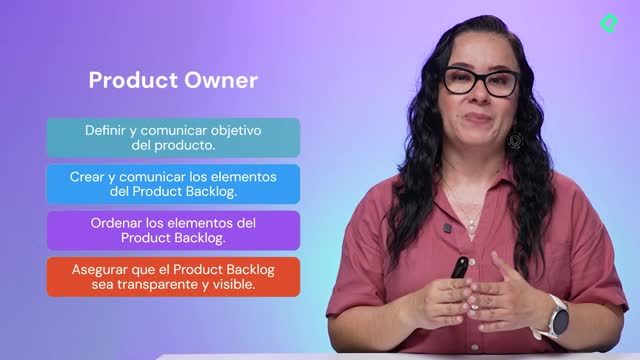
- Service to the Product Owner. Supports effective Product Backlog management and clear communication with stakeholders.
- Service to the organization. Leads, trains, and mentors the wider company in the proper adoption of Scrum.
This triple service explains why the role can't be reduced to scheduling meetings. The Scrum Master is constantly switching audiences, but the mission stays the same: enable better outcomes through Scrum.
Which skills should a Scrum Master master?
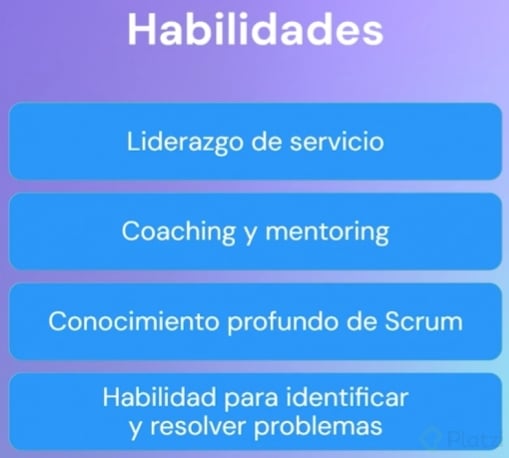
Four core skills define a strong Scrum Master, and you can spot them quickly when you watch one in action.
Leadership, coaching and mentoring
A Scrum Master practices servant leadership, focused on developing the team's potential rather than directing it. Through coaching and mentoring, guides the team to overcome its own obstacles instead of solving everything personally.
Deep Scrum knowledge
Knowing the rules isn't enough. A solid Scrum Master understands the theory behind the framework and lives its values: commitment, focus, openness, respect, and courage. That depth is what allows the role to defend Scrum when pressure mounts.
Problem identification and resolution
The Scrum Master acts as a catalyst, helping the team see impediments clearly and removing the ones that block progress. The goal isn't to be a hero; it's to build a team that can navigate problems on its own.
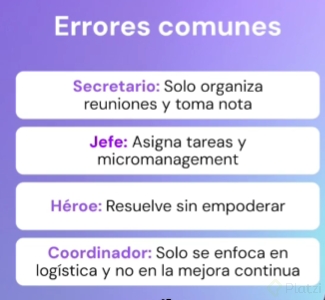
What are the most common Scrum Master mistakes?
Four anti patterns appear over and over, and recognizing them protects the role from being misunderstood.
- The secretary. Only schedules meetings and takes notes, adding no real value to the process.
- The boss. Assigns tasks and does micromanagement, killing self management.
- The hero. Solves every impediment alone and never empowers the team to do it.
- The coordinator. Focuses only on logistics and forgets about continuous improvement.
Is the Scrum Master the project manager? No. A Scrum Master doesn't assign tasks, set deadlines, or push the team. The focus is on coaching, removing impediments, and protecting the Scrum process so the team can self organize.
How does a Scrum Master act in real scenarios?
Three quick scenarios show how the role plays out with different stakeholders.
With the Product Owner mid sprint
A client requests a new feature in the middle of the sprint and the Product Owner gets nervous. Instead of telling the Product Owner what to do, the Scrum Master asks powerful questions: how does this affect the sprint goal, and how could we negotiate this while keeping transparency. The point is to guide the decision, not make it.
With a manager asking for a fixed date
A manager wants a detailed progress report and a fixed delivery date. Rather than promising a date, the Scrum Master uses the team's board to show the work done, the progress, and the risks. Educates the manager on how the team learns and adapts to deliver maximum value sustainably.
With developers stuck on a technical impediment
The development team hits a complex technical blocker. The Scrum Master sits with them but offers no solution. Instead, facilitates the conversation: what have you tried so far, who in the organization could help. Acts as a facilitator and impediment remover so the team solves the problem itself.
What does a Scrum Master do every day? Facilitates Scrum events, coaches the team and the Product Owner, removes impediments, protects the team from external interruptions, and pushes for continuous improvement through powerful questions.
Who would be a great Scrum Master in your environment?
A strong Scrum Master is a leader inside the team who boosts the skills of the Product Owner and the developers, asks powerful questions, and pushes continuous improvement of the process. Think about your current workplace or your personal project: who has the patience to coach, the courage to challenge a manager, and the humility to let the team shine?
Drop your answer in the comments and tell me who would step into this role in the Saluc Tech case study or in your own project.