- # What is the Cynefin Framework?
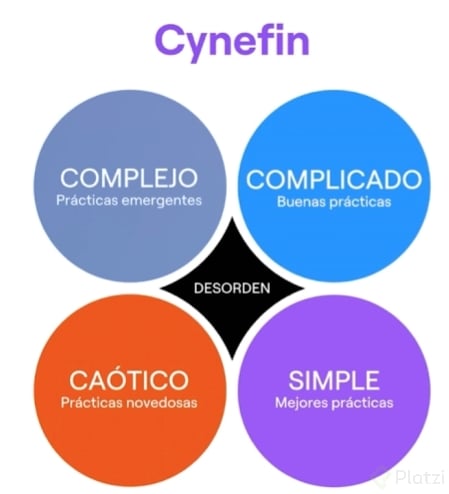
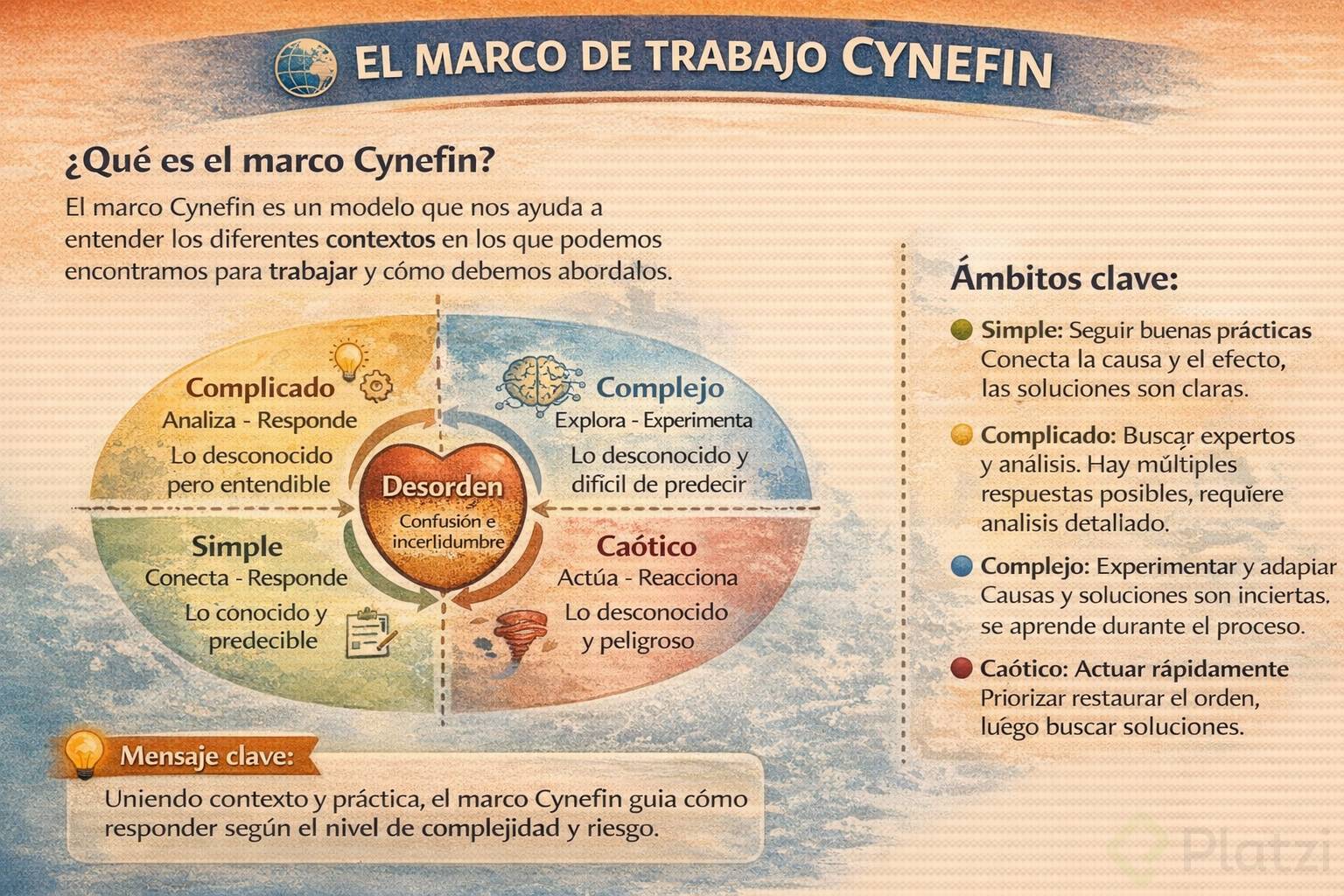
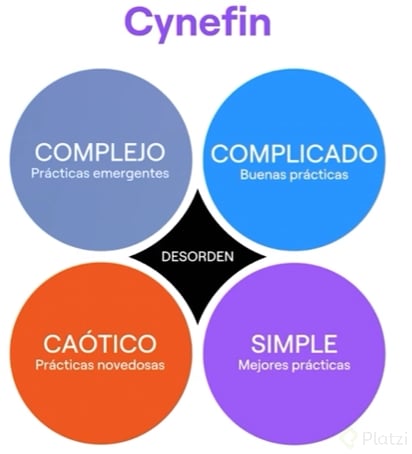
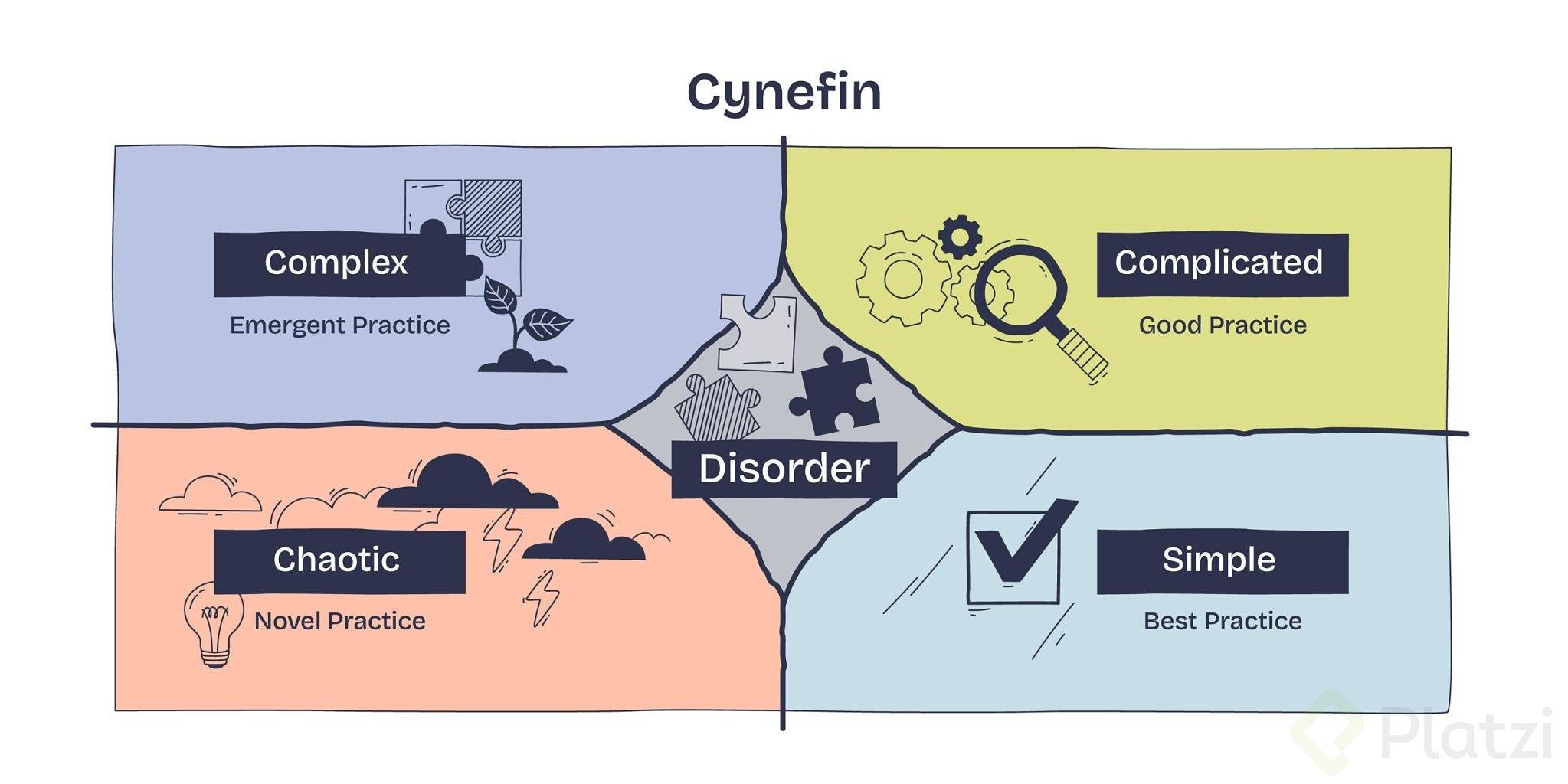
- It is a decision-making model that classifies situations into five domains, allowing you to choose the right approach for each scenario.
- Each domain demands a different mindset and a different type of action.
- **Simple (Clear):** You follow instructions and get the expected result.
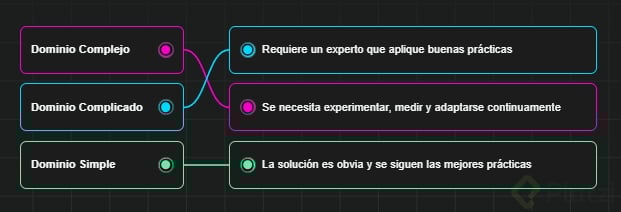
- **Complicated:** You call an expert to analyze the problem.
- **Complex:** There is no expert with the answer in advance; you must experiment.
- **Chaotic:** You act immediately to stop the bleeding.
- **Disorder (The Center):** You don't know which domain you are in. You judge the situation based on your own comfort zone, which usually leads to using the wrong approach.
- Each domain is a different game with different rules. Falling into **Disorder** or mixing them up is what often pushes teams into chaos.
- # Why Is [[Scrum]] Ideal for Complex Problems?
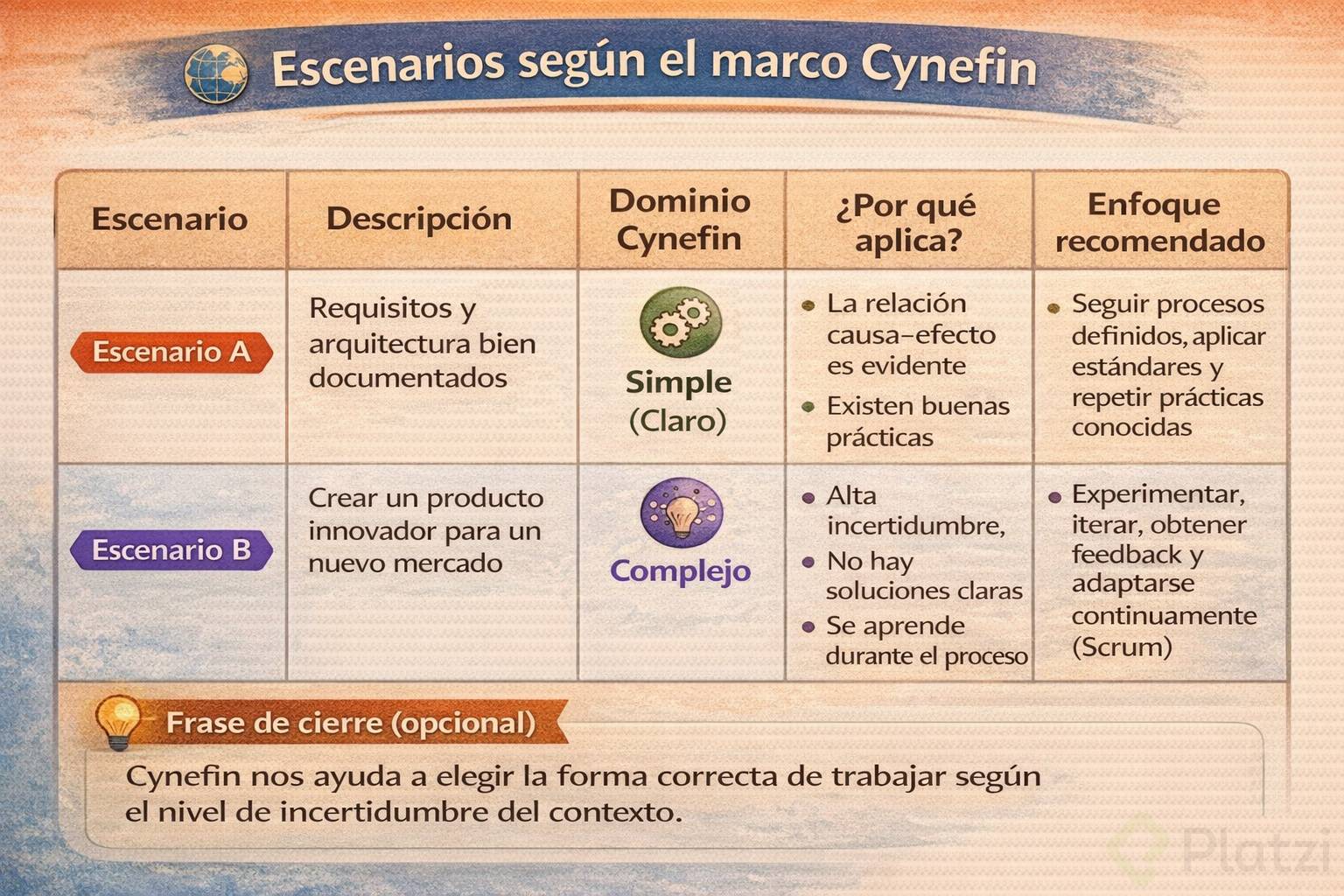
- Scrum was designed for the complex domain, where you cannot predict the outcome and no expert holds the full recipe. Its three pillars let you experiment, learn, and adapt continuously.
- Use Scrum when you face complexity and uncertainty—meaning you do not know the full requirements, the solution, or how users will react—and you need to learn through short iterations.
- ## How can I tell if my project is simple, complicated, or complex?
- Ask yourself how much you actually know before starting. The honest answer points you to the right domain and saves you from **Disorder**.
- If the steps and the result are predictable, you are in the simple domain and best practices are enough.
- If the problem is hard but solvable with expert knowledge, you are in the complicated domain and you need good practices.
- If neither you nor an expert can predict the outcome, you are in the complex domain and Scrum becomes your ally.
- # **Real-World Example (Cynefin Domains in a Tech Team):**
- **Clear:** Updating the company's password policy format. (You just follow a checklist, update the criteria, and it works. *Best practice*).
- **Complicated:** Migrating the local database to a cloud server. (It's hard and high-risk, but database engineers have done it thousands of times. You analyze, plan, and execute. *Good practice*).
- **Complex (Scrum Territory):** Designing a new feature to increase user engagement by 15%. (No expert can guarantee what will make users click. You must build a small prototype, test it, and see how they react. *Emergent practice*).
- **Chaotic:** The main production server crashes, and customer data is actively leaking. (You don't plan, you don't sprint. You patch the server *immediately* to stop the attack, and analyze later. *Novel practice*).
- **Disorder (The Center):** Sales start dropping because users find the app outdated (Complex). However, leadership forces the team to follow a rigid, 50-step project plan from an old product (Simple/Complicated) just because it feels safe. The team blindly follows the plan, completely failing to solve the real problem.