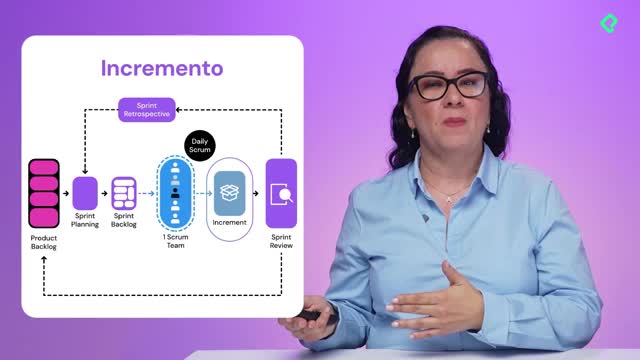
Customer feedback shapes whether a product actually solves a real problem. That's why the sprint review exists in Scrum: a collaborative session where the scrum team and stakeholders inspect the increment and gather feedback to adapt the product backlog. If you build software, lead agile teams, or work as a product owner, this is the moment where your work meets reality.
What is a sprint review and why does it matter?
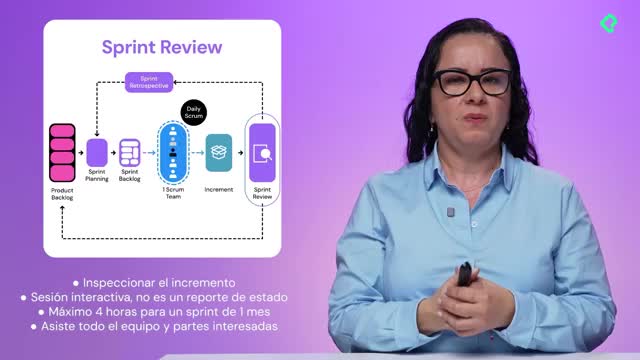
The sprint review is the event where the team shows the increment built during the sprint and opens the floor to clients and users. It's not a status report, it's a working conversation.
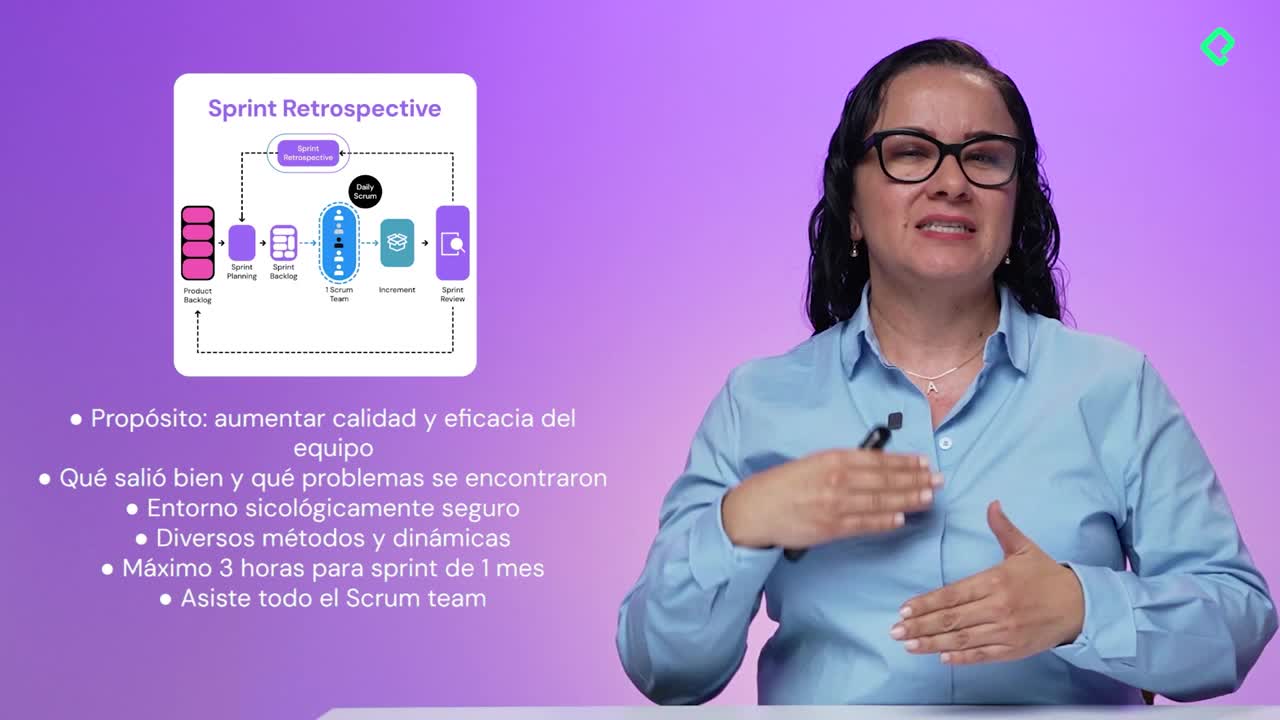
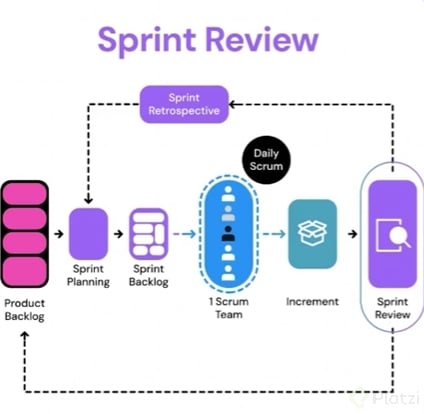
What is a sprint review in Scrum? It's a collaborative meeting at the end of each sprint where the scrum team inspects the increment with stakeholders and adjusts the product backlog based on their feedback.
The goal is simple: validate that what you're building is what the customer actually wants, and decide together what comes next.
How long should a sprint review last and who attends?
The time box scales with the length of the sprint. For a one month sprint, the review caps at four hours. Shorter sprints usually mean shorter reviews.
Attendees include:
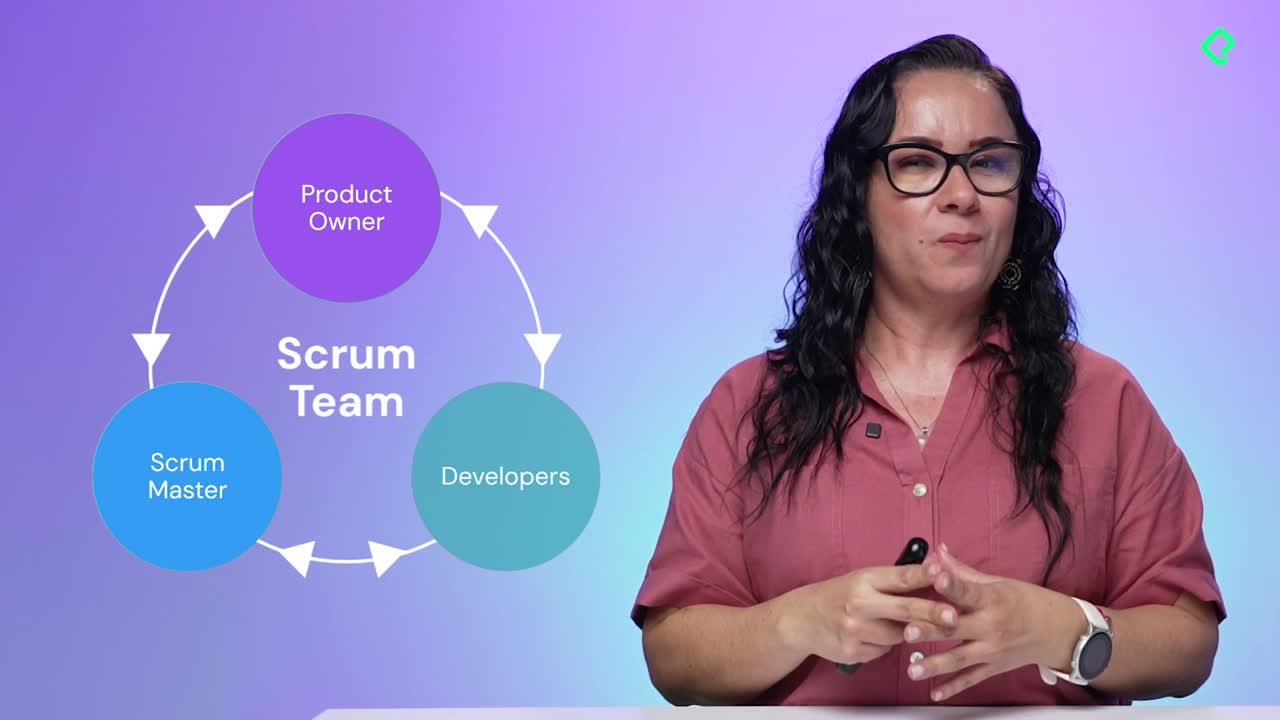
- The full scrum team: product owner, scrum master, and developers.
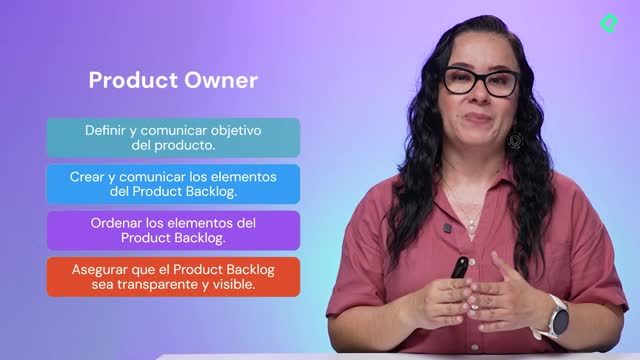
- Stakeholders such as clients or end users, invited by the product owner.
- Anyone whose feedback can shape the next iteration of the product.
The key trait is interactivity. Everyone in the room is expected to speak, ask, and react.
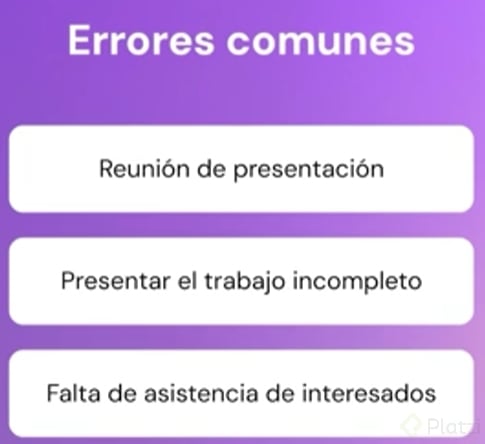
What are the most common mistakes in a sprint review?
Even experienced teams fall into the same traps. Spotting them early protects the value of the event.
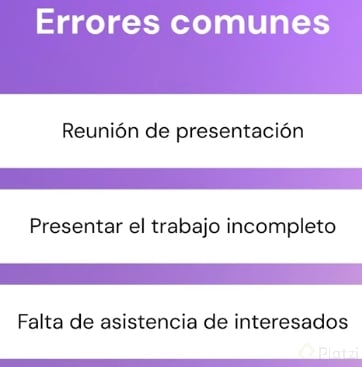
- Turning the session into a one way presentation instead of an open discussion.
- Showing incomplete work, which creates confusion and blocks useful feedback because the product isn't usable yet.
- Running the review without stakeholders, which kills the whole point of inspecting the increment with the people who will use it.
If any of these show up, the review stops being a review and becomes a demo with no consequences.
Is a sprint review the same as a product demo? No. A demo is one directional, the team shows and the audience watches. A sprint review is a two way conversation where stakeholders shape the next sprint with their input.
How does a sprint review look in practice?
Picture a team building a language learning app. A developer opens the application on a big screen while the product owner welcomes a small group of stakeholders, including two users who volunteered to give feedback.
The developer frames the session: "For this sprint, our goal was to build the basic vocabulary learning feature. We'll show you the first version." Then walks through the welcome screen and the first English word with a button to play the pronunciation.
One stakeholder reacts: "I love that you can hear the pronunciation, that's really useful." Another adds: "The lesson is great, but I'd like the pronunciation system to be more accurate." The product owner writes it down: "Great point. We can prioritize this for the next sprint."
That short exchange is the whole purpose of the event. The team didn't just present, they captured a concrete improvement directly from a real user and translated it into backlog priority.
How do you turn feedback into product backlog updates?
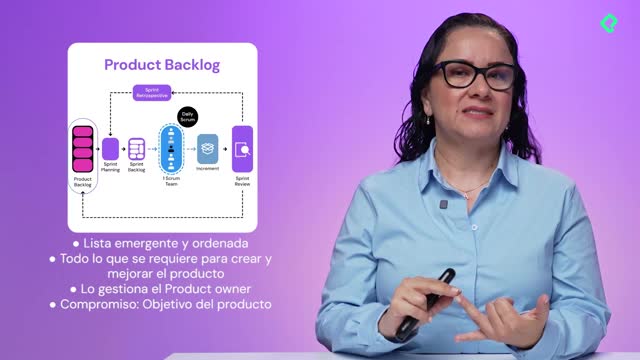
The sprint review feeds the product backlog. Every comment, request, or concern becomes raw material for the product owner to refine priorities.
What happens with the feedback after a sprint review? The product owner takes the input, updates the product backlog, and reorders priorities so the next sprint reflects what stakeholders actually need.
That loop, build, show, listen, adjust, is what makes Scrum adaptive instead of just iterative. Without honest feedback in the review, the backlog drifts away from the customer.
How often does your organization ask customers for feedback? Do you use a specific method or ritual? Drop your notes in the comments and share how your team runs its reviews.