Clase 16 – Sprint Retrospective
---
A. CASO SALUD TECH
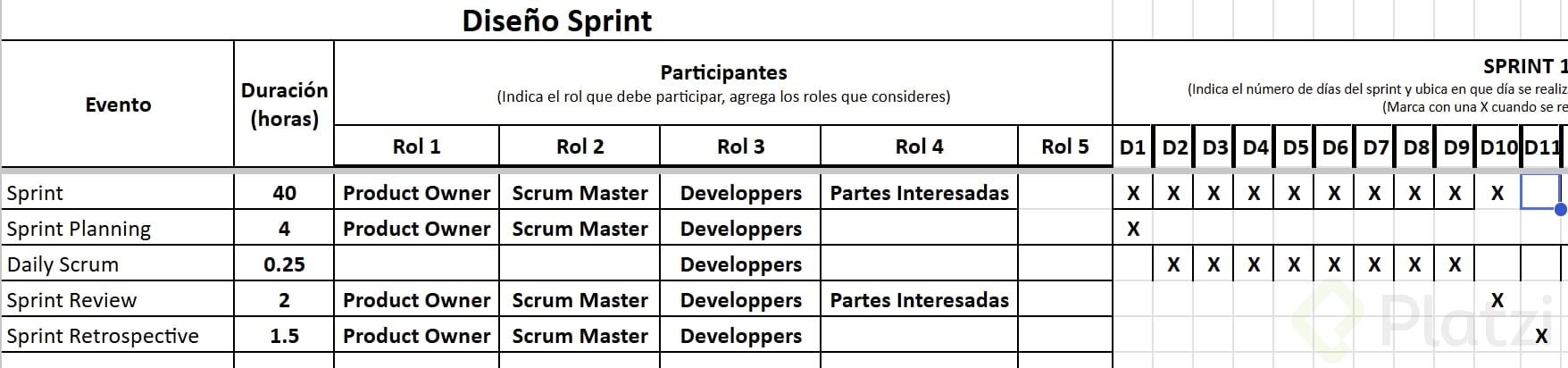
1. Eventos del Sprint (duración total 1 semana)
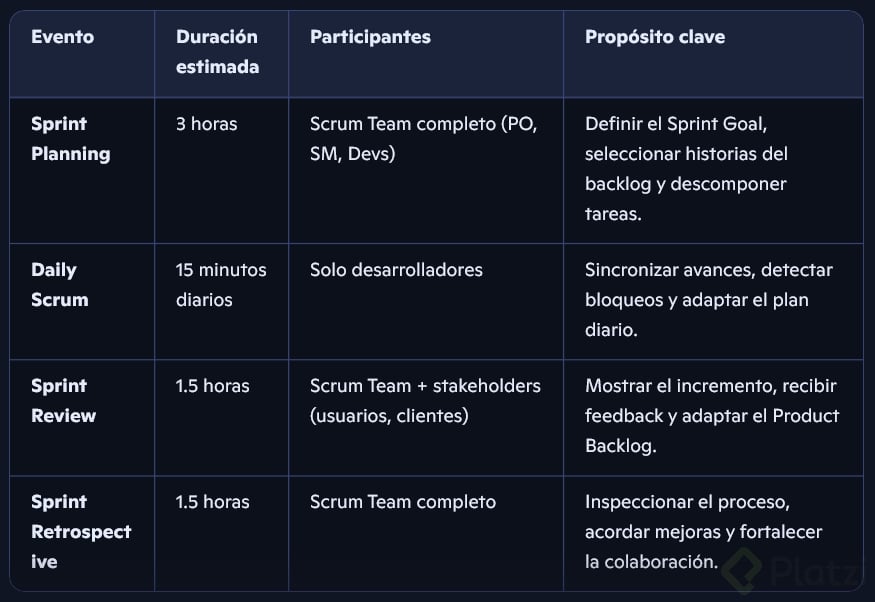
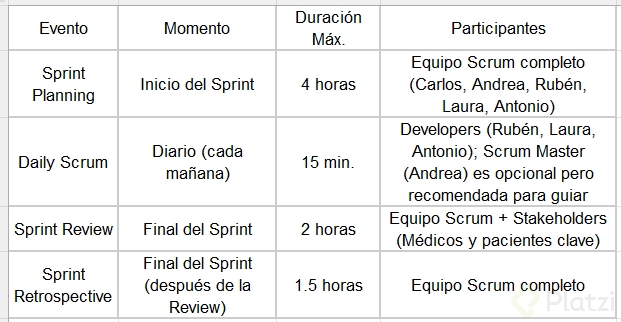
Día 1 – Sprint Planning: 2 h (todo el Scrum Team)
Días 2-4 – Daily Scrum: 15 min diarias (Developers; SM y PO como oyentes)
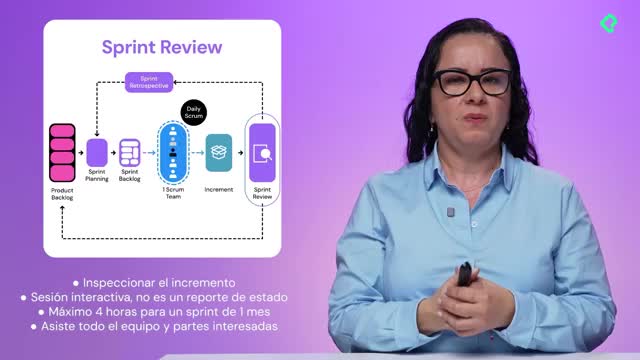
Día 5 – Sprint Review: 1 h (todo el Scrum Team + 1 stakeholder externo invitado)
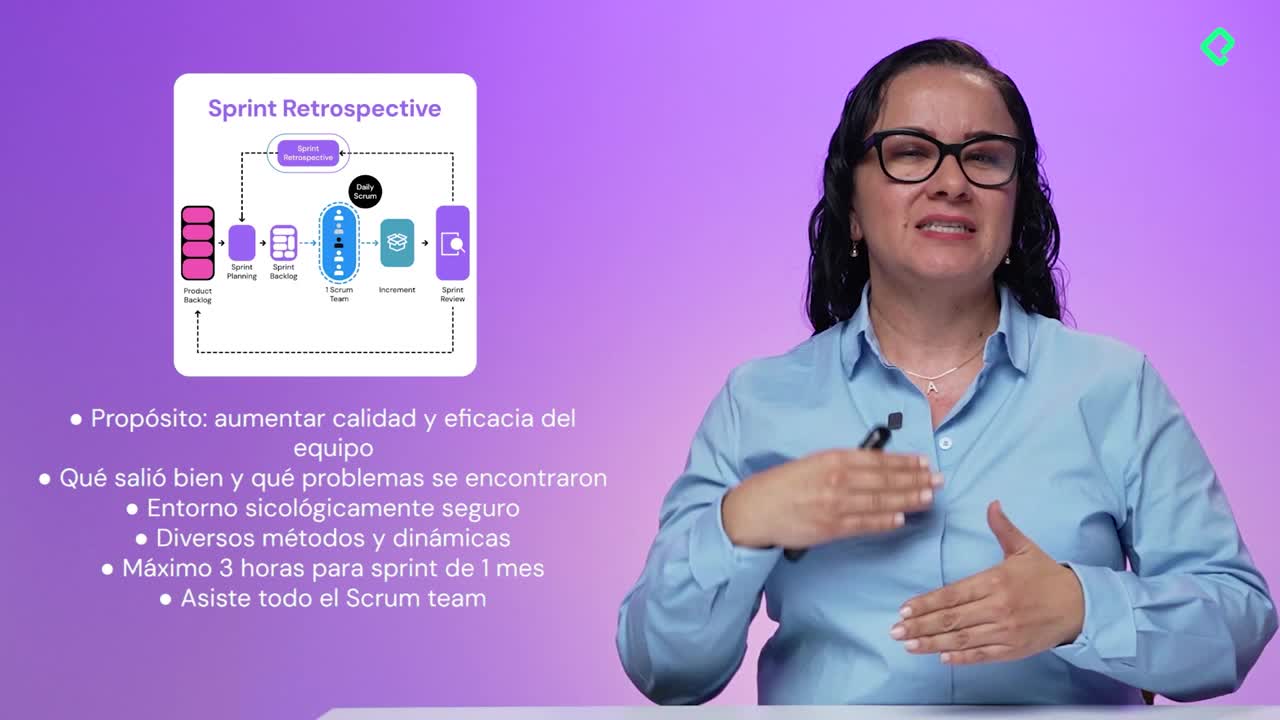
Día 5 – Sprint Retrospective: 45 min (solo Scrum Team – 5 personas)
2. Retrospective diseñada
Duración: 45 min
Facilitador: Andrea (Scrum Master)
Formato elegido: “Start-Stop-Continue” + votación dot-voting (3 votos c/u)
Participantes: Carlos (PO), Andrea (SM), Rubén, Laura, Antonio (Devs)
Agenda detallada (time-boxed)
00:00-00:05 Check-in: “Una palabra sobre cómo te sentiste este sprint”
00:05-00:15 Recopilación de datos: sticky-notes en Miro – 3 columnas Start / Stop / Continue
00:15-00:25 Agrupación y votación: identificar top-3 temas
00:25-00:35 Conversación focalizada: “¿Qué acción concreta eliminará el impedimento #1?”
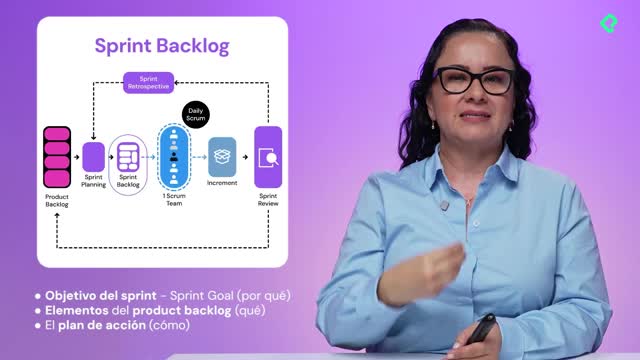
00:35-00:45 Compromiso: 1 acción mejora escrita, owner y fecha revisión (se convierte en ítem del Sprint Backlog siguiente)
3. Acción priorizada salida de la retro
“Implementar integración continua: Rubén configura GitHub Actions para ejecutar tests automáticos en cada push antes del próximo Sprint Planning.”
Owner: Rubén
Due: 3 días antes del siguiente Sprint Planning
Métrica de seguimiento: % de builds exitosos > 90 % durante el sprint.
---
B. PROYECTO PERSONAL – APP “FINZ”
1. Sprint elegido: 2 semanas
Eventos
Semana 1 – día lunes: Sprint Planning 1 h (yo solo = PO + SM + Dev)
Diariamente: Daily Scrum 5 min (nota mental o post-it)
Semana 2 – viernes: Sprint Review 30 min (demo a un amigo usuario beta)
Semana 2 – viernes: Sprint Retrospective 30 min (solo yo)
2. Retrospective personal (30 min)
Técnica: “Mad-Sad-Glad” + 1 acción
Paso 1: anotar 1 cosa que me enojó, 1 que entristeció, 1 que alegró
Paso 2: elegir la más crítica (Mad)
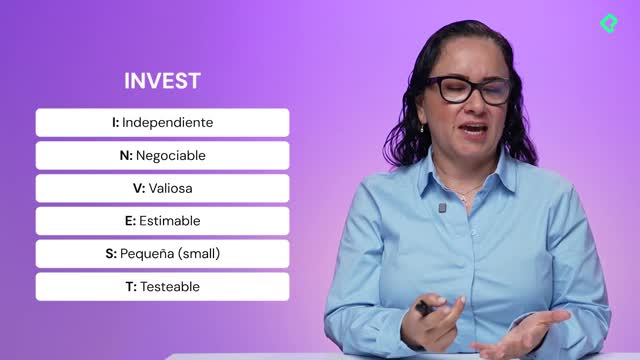
Paso 3: acción SMART para el próximo sprint
Ejemplo resultado
Mad: “Perdí 3 h configurando la API de Alpha Vantage por falta de documentación”
Acción: “Crear un script de configuración con variables de entorno y documentarlo en README antes del siguiente Sprint Planning”