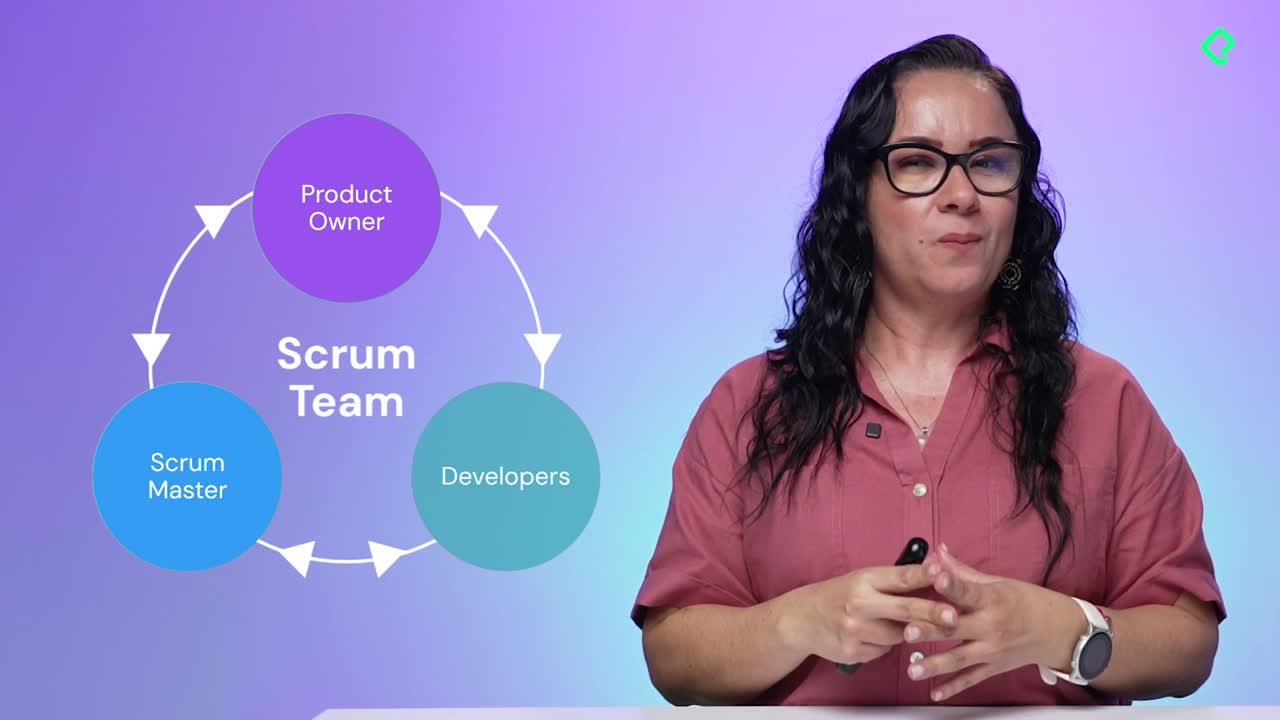
The Product Owner is the person responsible for maximizing the value of a product or service in a Scrum team. If you're stepping into agile environments, understanding this role helps you see who connects the customer's voice with the team's daily work, and why that single point of accountability matters so much.
What does a Product Owner actually do?
Think of the Product Owner as the product's leader, not a committee. This is one person who speaks for stakeholders and customers inside the team, and who carries clear responsibilities every day.
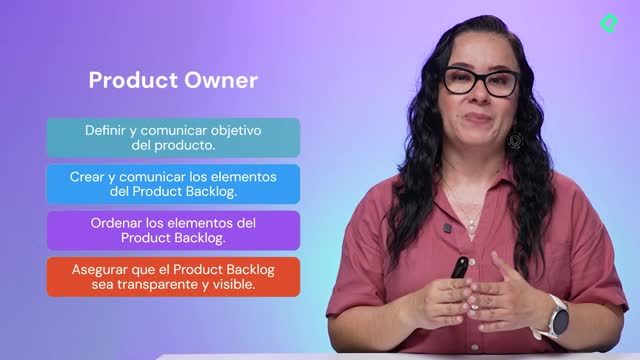
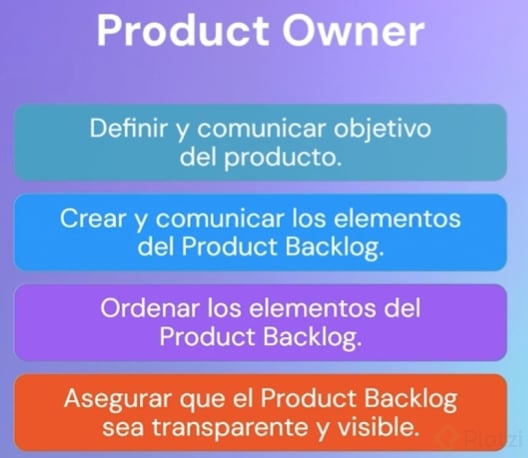
Here are the core responsibilities you should know:
- Define and communicate the goal of the product or service being developed.
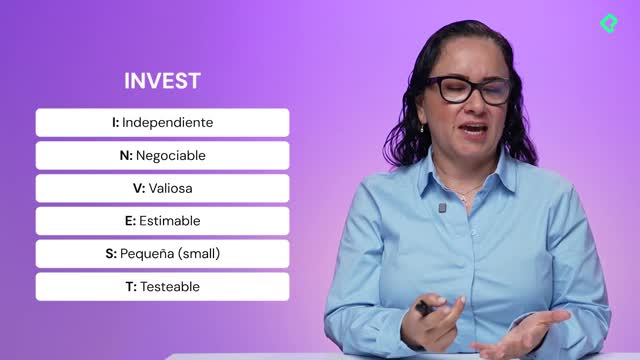
- Create and communicate each item in the product backlog.
- Order and prioritize every item in that backlog.
- Keep the backlog visible and transparent for the customer, the team, and the organization.
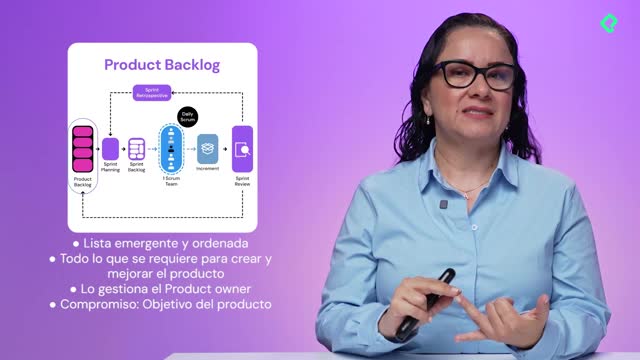
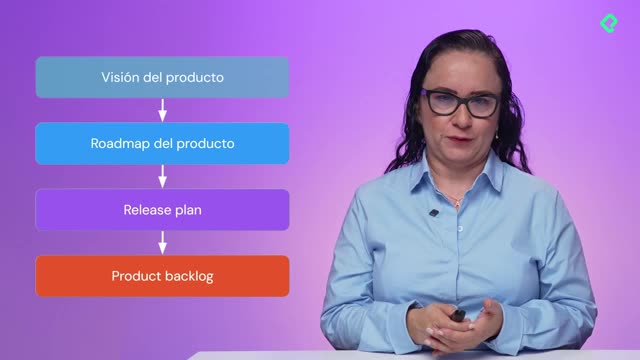
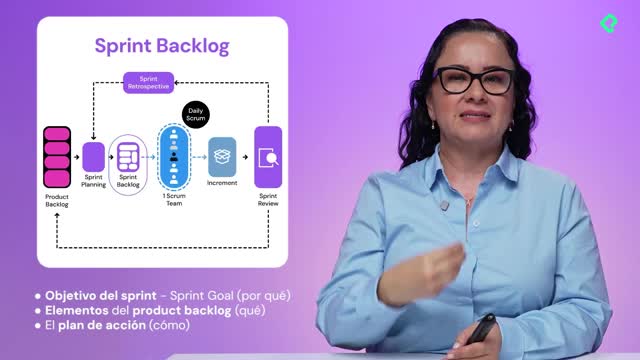
What is a product backlog? It's the ordered list of everything that could be built into the product. The Product Owner owns it, prioritizes it, and keeps it transparent for everyone involved.
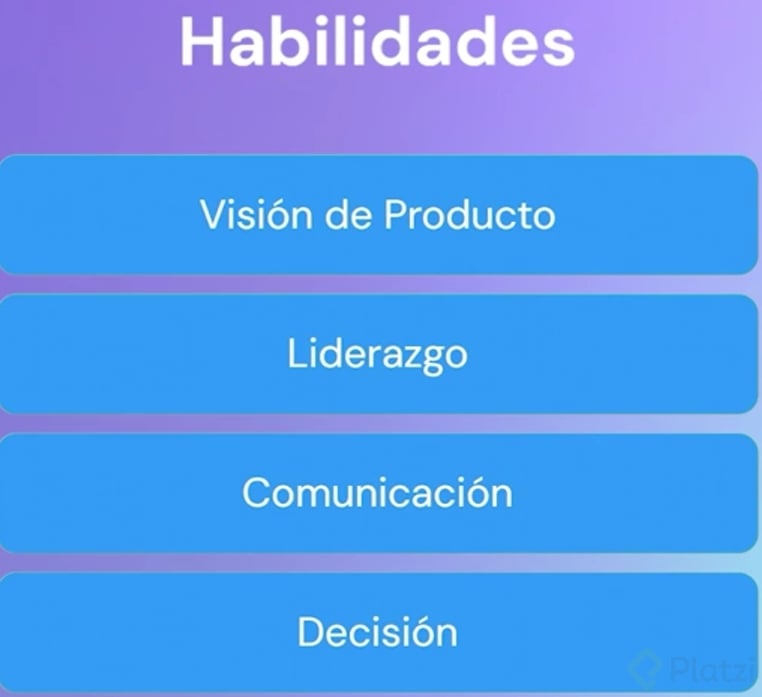
Which skills does a great Product Owner need?
A strong Product Owner blends soft skills with technical understanding. And here's where the role gets interesting: you can't fake any of these for long.
- Product vision: knowing the target market and the strategy behind the product.
- Leadership: inspiring the team and stakeholders around the product.
- Communication: clearly transmitting the goal everyone is working toward.
- Decision-making: making firm calls about the backlog without hiding behind a group.
Remember, the Product Owner is one person with the authority to decide. That's not a detail, it's the whole point of the role.
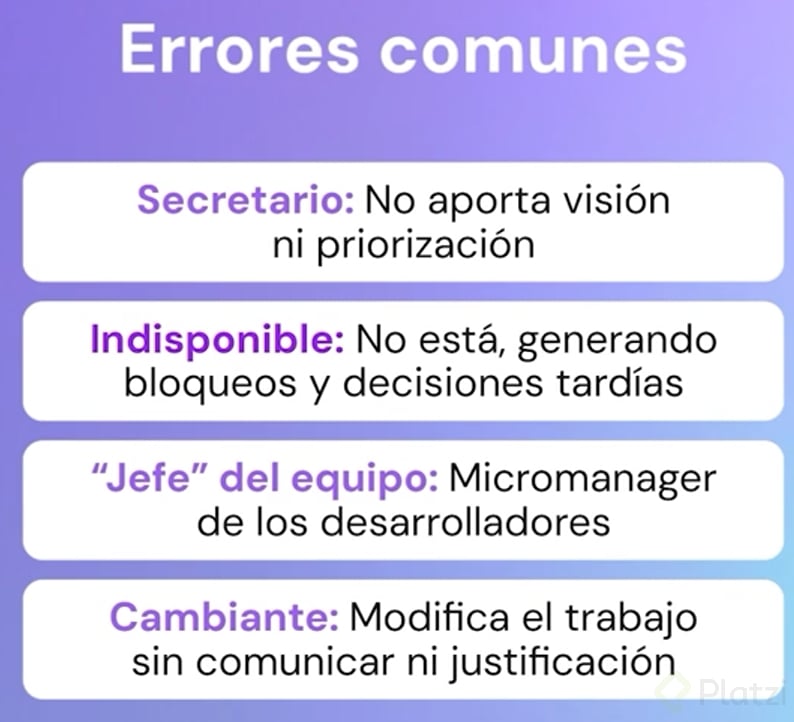
What are the most common Product Owner mistakes?
Many teams struggle because the Product Owner falls into one of four anti-patterns. If you recognize any of these in your environment, you've found a problem worth fixing.
The secretary, the absent, the boss and the unpredictable
- The secretary: only takes notes, contributes no vision or prioritization.
- The unavailable one: is never there for the team, causing blockers and late decisions.
- The team boss: micromanages developers and decides who does what.
- The changeable one: constantly modifies the backlog without clear justification, creating ambiguity about the goal.
Each of these patterns breaks the trust the role depends on. The fix is always the same: return to vision, prioritization, and clear decisions.
Is the Product Owner the team's boss? No. The Product Owner decides what and why, but never how. Telling developers how to do their work is micromanagement, not product ownership.
How does a Product Owner work day to day?
To picture the role, imagine three short scenes that show the Product Owner in action with different audiences.
Scene with the customer
The Product Owner listens carefully and asks sharp questions: what problem are we trying to solve? and how will we know this is valuable? The customer shares needs, and the Product Owner takes notes to translate that into backlog items later.
Scene with the manager
A manager asks about project progress. The Product Owner shows the product backlog, explains the product vision and the current objective, and commits to delivering value iteratively. Expectations are managed transparently, without inflated promises.
Scene with the Scrum team
The Product Owner explains the purpose of each backlog item, answers questions, and makes sure the team understands the why behind the work, without dictating how. Together they refine items and estimate effort.
Who does the Product Owner talk to most? Customers, stakeholders, and the Scrum team. Each conversation has a different goal, but all of them aim at the same thing: maximizing product value.
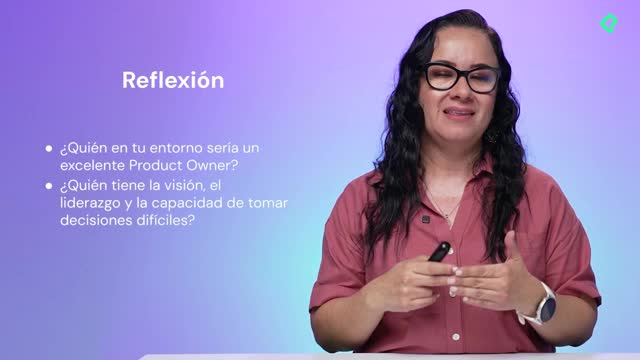
Who in your environment could be a great Product Owner?
This role lives or dies on three traits: vision, leadership, and the courage to make hard decisions. When you look around your workplace or your project, ask yourself who already shows those qualities, even informally.
Use the SaludTech case study and your personal project to answer these reflection questions:
- Who has a clear vision of the product or service?
- Who naturally leads and inspires others around an idea?
- Who can make tough calls and stand by them?
Share your answers in the comments of the class. In the next class you'll meet the responsibilities of the Scrum Master, the other half of the leadership equation in Scrum.