Matrix multiplication has one strict rule: inner dimensions must match. But real-world data rarely arrives in the right shape. The matrix transpose is the operation that fixes this, letting you swap rows for columns and make incompatible matrices ready to multiply.
What is the transpose of a matrix and how does it work?
The transpose is one of the easiest matrix operations to picture. You take every row and turn it into a column, so the first row becomes the first column, the second row becomes the second column, and so on.
If matrix A has dimensions m x n, its transpose, written as A^T, will have dimensions n x m. That dimension flip is the whole point: it changes the shape so the matrix fits where it didn't before.
Geometrically, transposing also changes the perspective of a transformation. If A equals the columns (a, b) and (c, d), those columns represent where î and ĵ land after the transformation. After transposing, î becomes (a, c) and ĵ becomes (b, d), which visually shifts the parallelogram of the transformation.
What does transposing a matrix actually do? It swaps rows and columns. A 2x3 matrix becomes 3x2, and the basis vectors of the transformation get rewritten using the original rows.
How do you visualize the transpose with a concrete example?
Take A = [3, 0; 1, 2]. Its transpose is A^T = [3, 1; 0, 2]. In the original, î = (3, 0) and ĵ = (1, 2). After transposing, î = (3, 1) and ĵ = (0, 2). If you plot both, you'll see the parallelogram from the original transformation slide slightly to the left. That visual shift is the transpose, made geometric.
Why do you need a transpose to multiply matrices?
Multiplication only works when the columns of the first matrix match the rows of the second. When they don't, transposing one of them is often the fix.
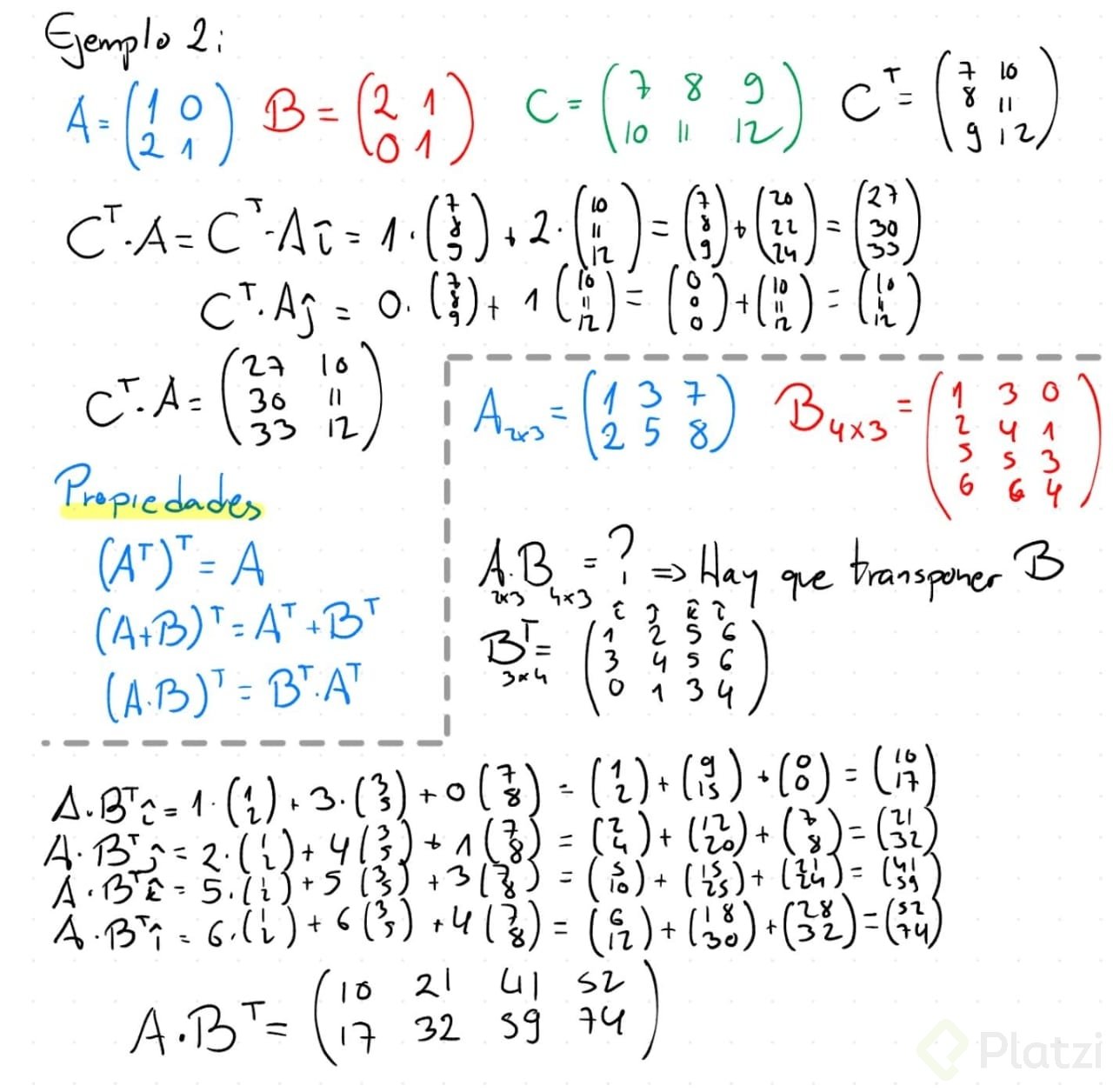
Let's walk through it. You have A = [1, 0; 2, 1] and B = [2, 1; 0, 1]. Both are 2x2, so multiplying A · B works without trouble.
Now bring in C, a 2x3 matrix with values [7, 10; 8, 11; 9, 12]. Multiplying A · C works because A is 2x2 and C is 2x3, and the inner dimensions (2 and 2) match.
But what if you want to multiply C · A? Now C is 2x3 and A is 2x2. The inner dimensions (3 and 2) don't match. You're stuck unless you transpose C.
- Transpose C to get C^T = [7, 8, 9; 10, 11, 12], now 3x2.
- Multiply C^T · A: dimensions are 3x2 and 2x2, which works.
- The result will be a 3x2 matrix.
Try the multiplication and share your result in the comments.
When should I transpose a matrix before multiplying? When the number of columns of the first matrix doesn't match the number of rows of the second. Transposing one of them realigns the dimensions.
What are the key properties of the transpose operation?
Three properties show up constantly in linear algebra and machine learning, and you'll lean on them often.
- Double transpose returns the original: (A^T)^T = A. Swap rows and columns, then swap them back, and you're home.
- Transpose of a sum: (A + B)^T = A^T + B^T. You can transpose each matrix individually and then add.
- Transpose of a product reverses the order: (A · B)^T = B^T · A^T. The order flips, and each matrix is transposed on its own.
That last property connects directly to composing transformations. If A · B represents first a rotation and then a shear, transposing the product means you transpose the shear first, then the rotation. The order reversal isn't a quirk; it's how the geometry stays consistent.
How can you practice the transpose with a real exercise?
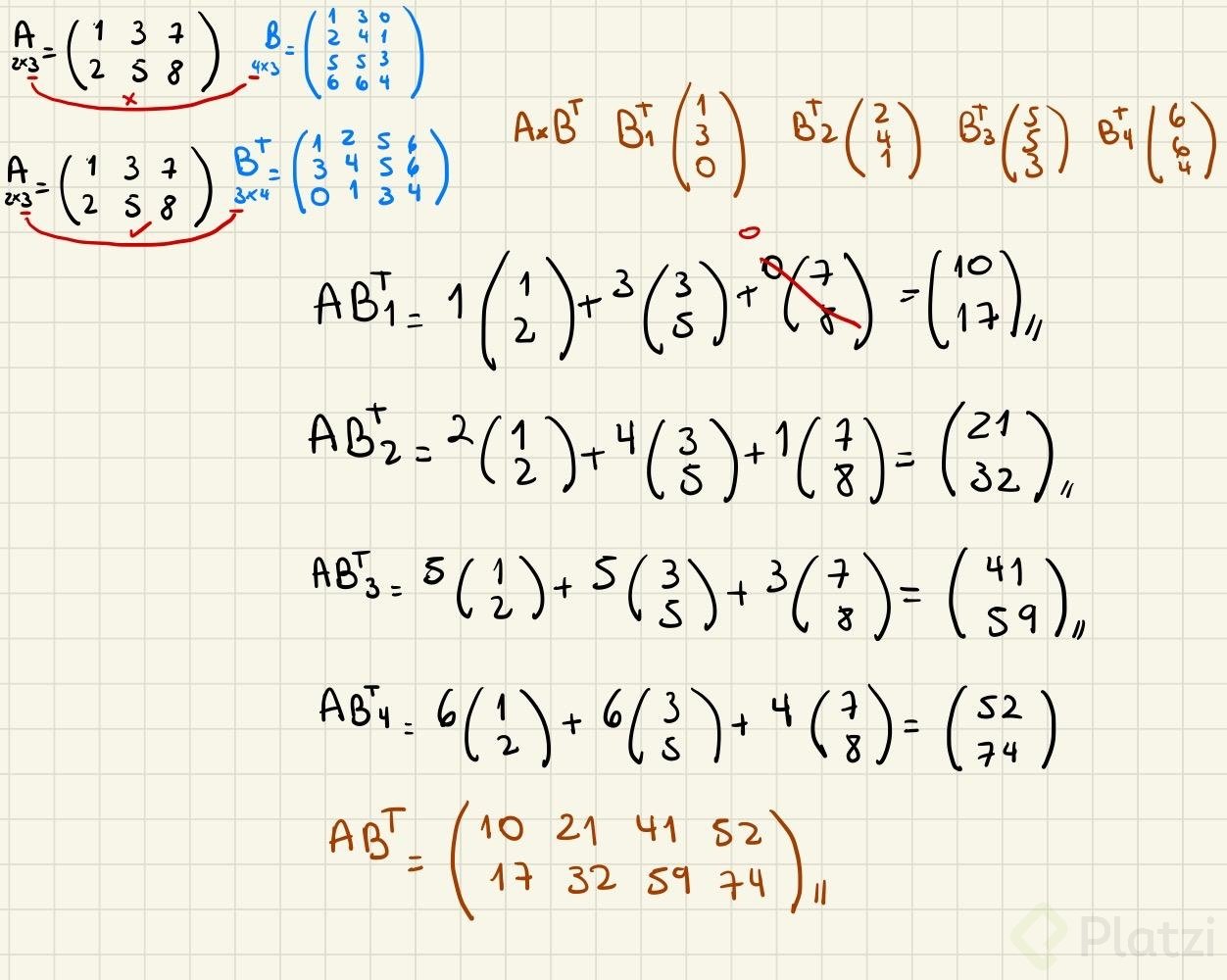
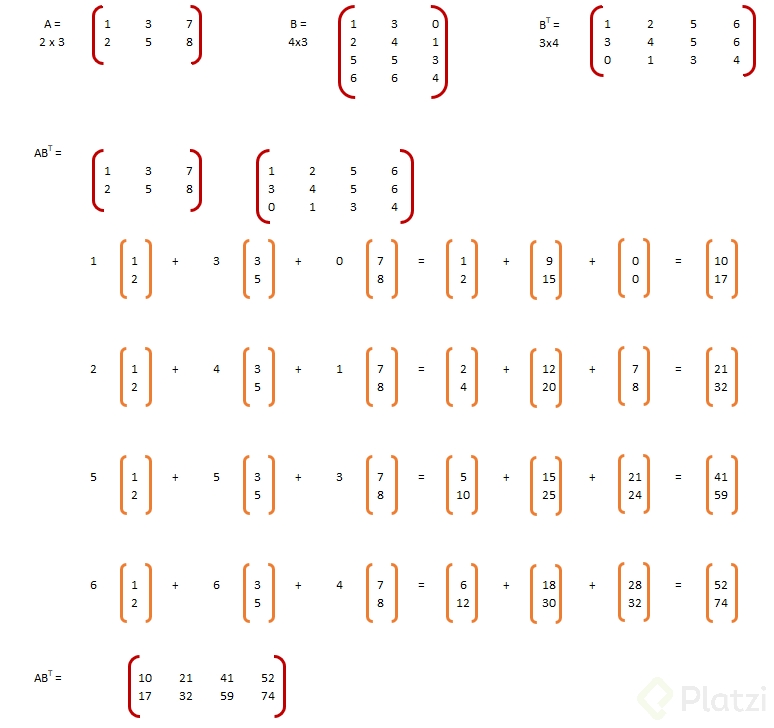
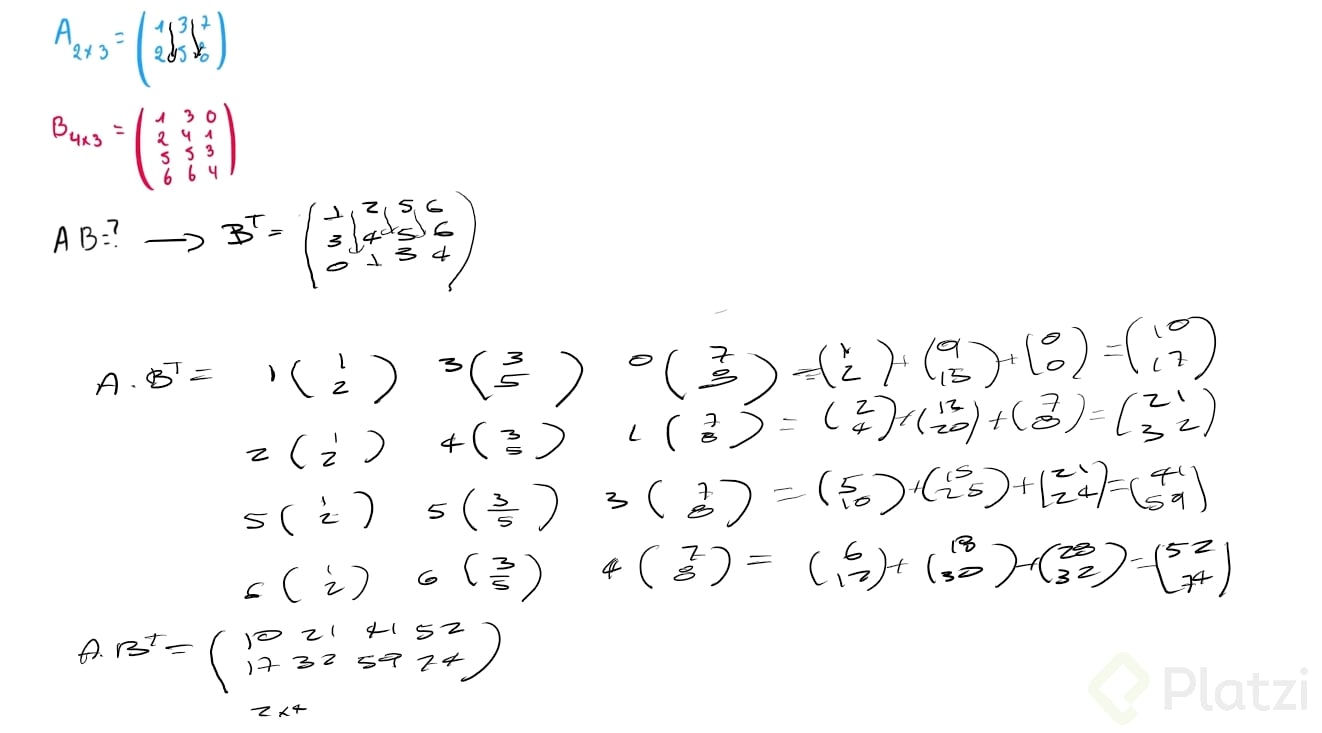
Here's a problem to test your reasoning. You have:
- Matrix A with dimensions 2x3: [1, 2, 3; 5, 7, 8].
- Matrix B with dimensions 4x3: [1, 2, 5, 6; 3, 4, 5, 6; 0, 1, 3, 4].
Try to compute A · B. Before you start, ask yourself: do the inner dimensions match? If not, which matrix would you transpose, and what would the new dimensions be? Run the numbers and drop your answer in the comments.
With matrices, operations, and transformations under your belt, you're ready for what comes next: using all of this to solve systems of linear equations.