Knowing when a matrix is invertible saves you from wasting time on systems that have no unique solution. The shortcut lives in one number: the determinant. If it equals zero, the transformation crushes space and loses information forever. If it doesn't, you can reverse it and solve the system cleanly.
This logic ties together two ideas you already met: the inverse matrix as an undo button, and the determinant as the measure of how a transformation scales area or volume. Together, they form the diagnostic rule of linear algebra.
Why does a zero determinant block the inverse?
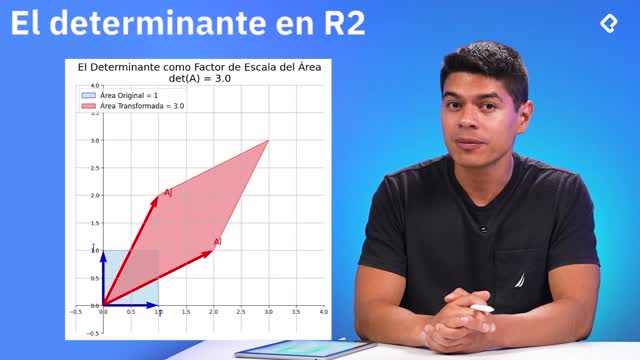
A determinant of zero means the matrix flattens space into a lower dimension. A 2D plane collapses into a line, a 3D space collapses into a plane or a line [1:00].
And here comes the interesting part: when space gets crushed, multiple input vectors land on the same output point. If you tried to reverse the transformation from that point, which original vector should you return to? There's no single answer.
What does a zero determinant mean? It means the matrix flattens space and merges different input vectors into the same output. You can't undo that, so the matrix has no inverse.
That's why a transformation that flattens space has no undo button. No undo, no inverse matrix.
How do you know if a square matrix is invertible?
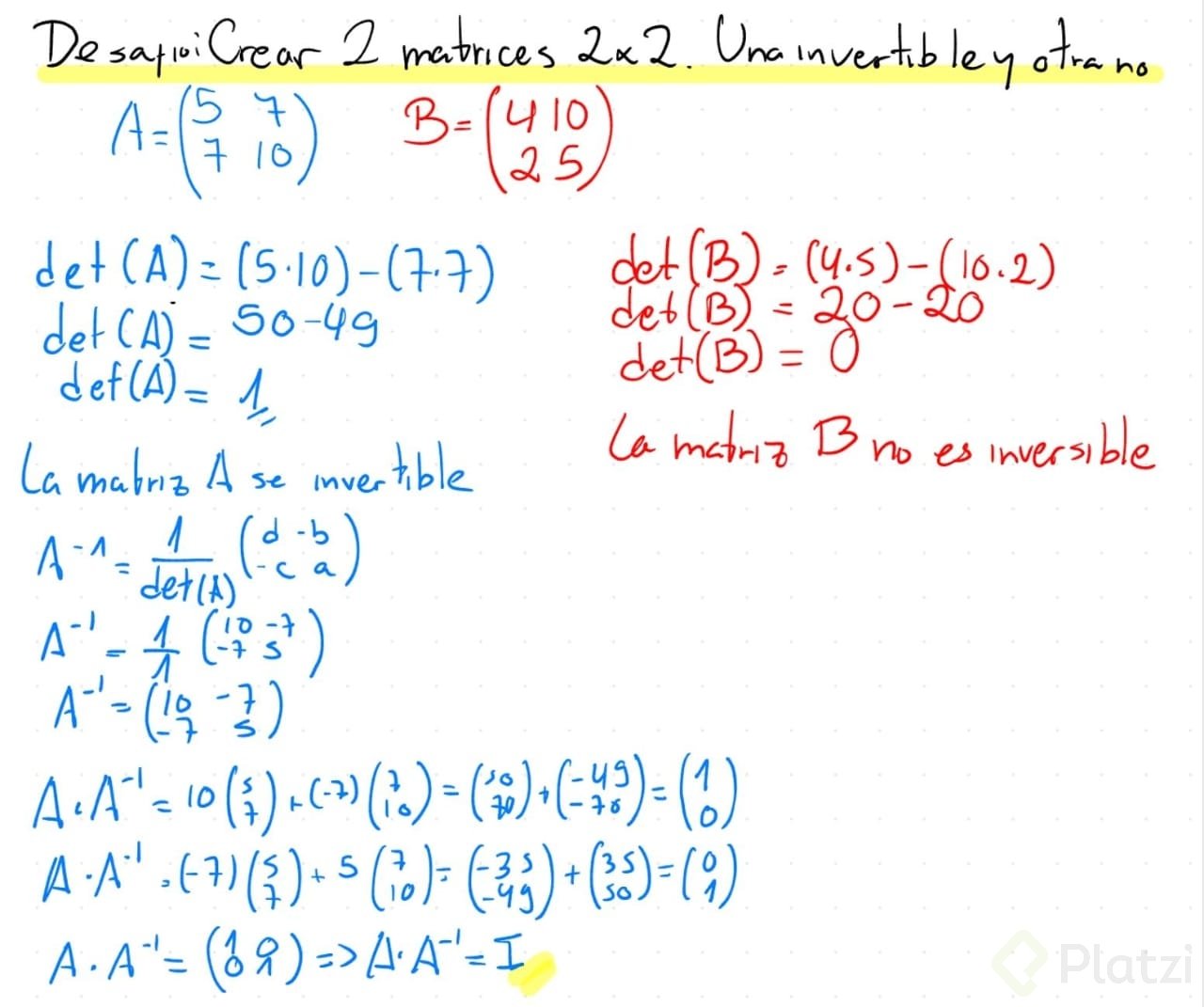
The rule is short and powerful: a square matrix is invertible if and only if its determinant is different from zero [1:45].
Use it as a diagnostic before calculating anything heavy:
- If det(A) ≠ 0, the matrix has an inverse, the transformation is reversible, and the system Ax = b has a unique solution.
- If det(A) = 0, the matrix has no inverse, information is lost, and Ax = b has either infinite solutions or none.
- Always run this check before trying to invert or solve.
With this filter, you avoid dead ends and know in advance what kind of answer to expect.
Invertible case: 90 degree rotation
Take the matrix A = [[0, 1], [-1, 0]], which rotates space 90 degrees counterclockwise [2:30]. Its determinant is (0)(0) − (1)(−1) = 1.
The area is preserved, no information is lost, and you can return to the original state by rotating −90 degrees. The matrix is invertible.
Non invertible case: collapse to the X axis
Now take B = [[1, 0], [0, 0]]. Its determinant is (1)(0) − (0)(0) = 0 [3:45]. This transformation flattens the plane onto the X axis, erasing all information from the Y axis. You can't unflatten what's already flat, so B is not invertible.
How do you calculate the inverse of a 2x2 matrix?
For a 2x2 matrix [[a, b], [c, d]], the inverse follows a clean formula: multiply 1/det(A) by a new matrix where you swap the main diagonal and negate the other two entries [4:30].
The steps look like this:
- Calculate the determinant. If it's zero, stop, there's no inverse.
- Swap the positions of a and d on the main diagonal.
- Negate b and c.
- Multiply the whole matrix by 1/det(A).
How do I invert a 2x2 matrix fast? Swap the main diagonal, negate the off diagonal entries, and divide everything by the determinant. If the determinant is zero, the inverse doesn't exist.
Worked example with A = [[3, 2], [1, 1]]
First, the determinant: (3)(1) − (2)(1) = 1. Since it's not zero, the matrix is invertible [5:30].
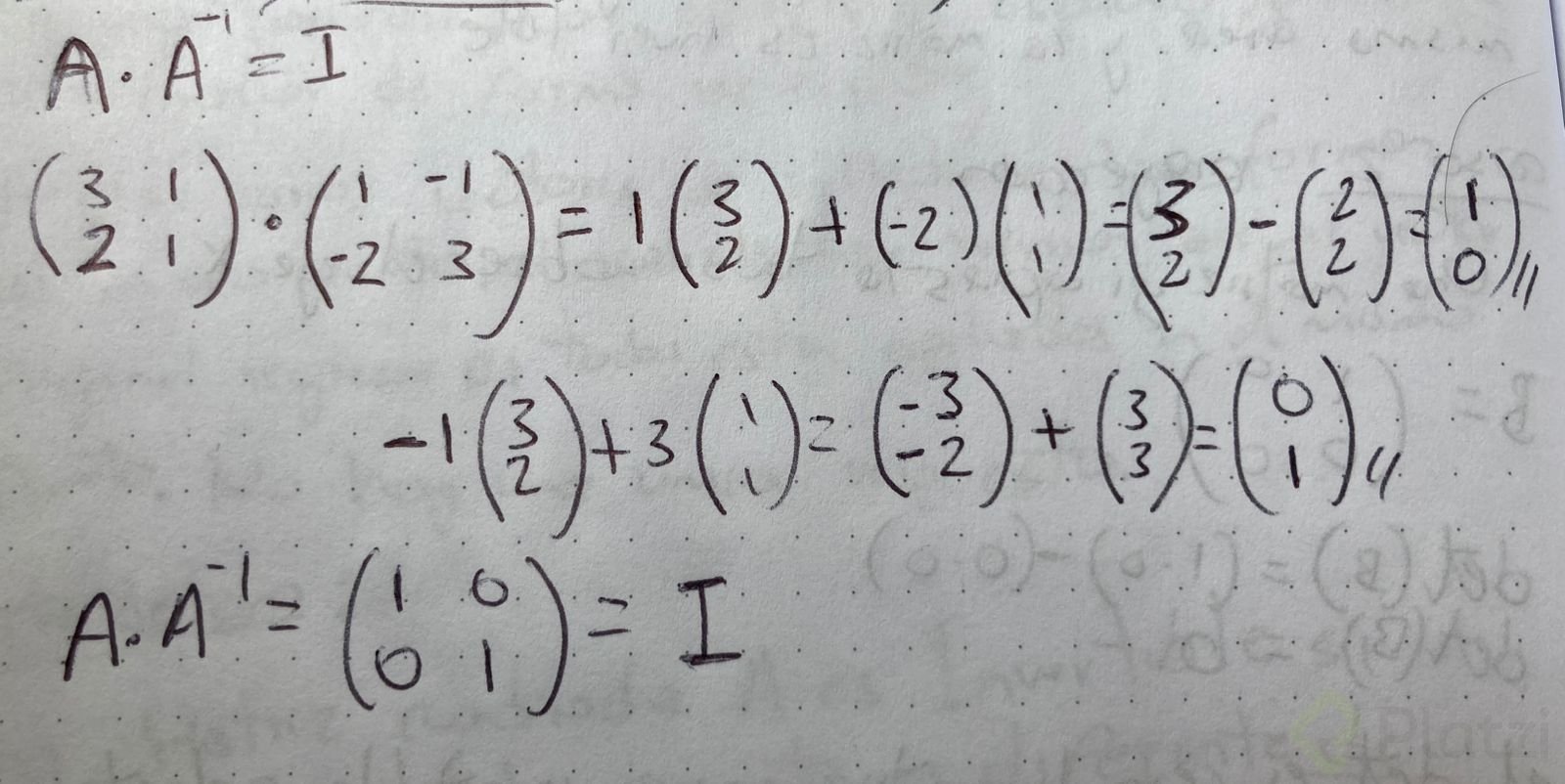
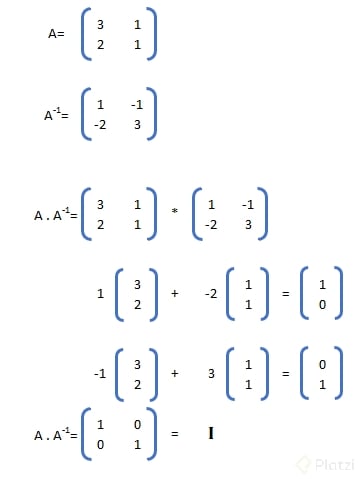
Apply the formula: swap the diagonal to get [[1, 2], [1, 3]], negate the off diagonal to get [[1, −2], [−1, 3]], and multiply by 1/1. The inverse is [[1, −2], [−1, 3]]. You can verify by multiplying A by its inverse and checking that the result is the identity matrix.
How do you solve a system using the inverse matrix?
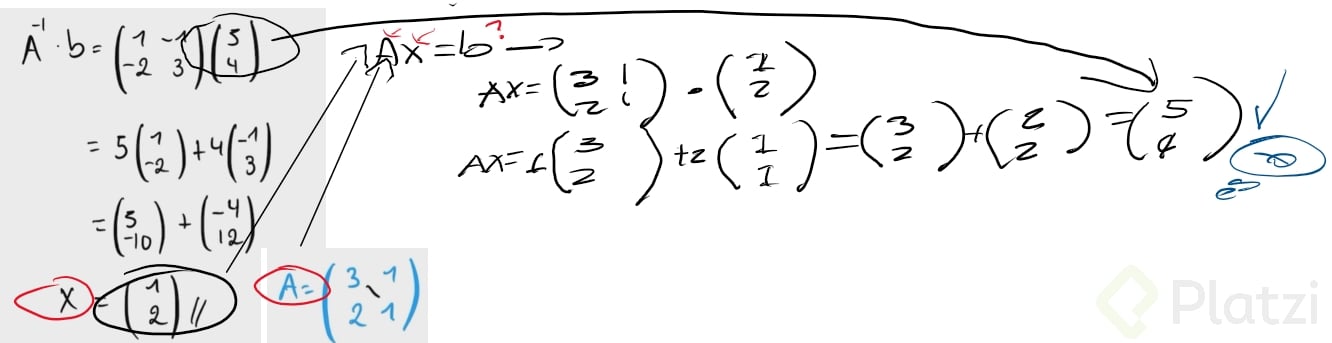
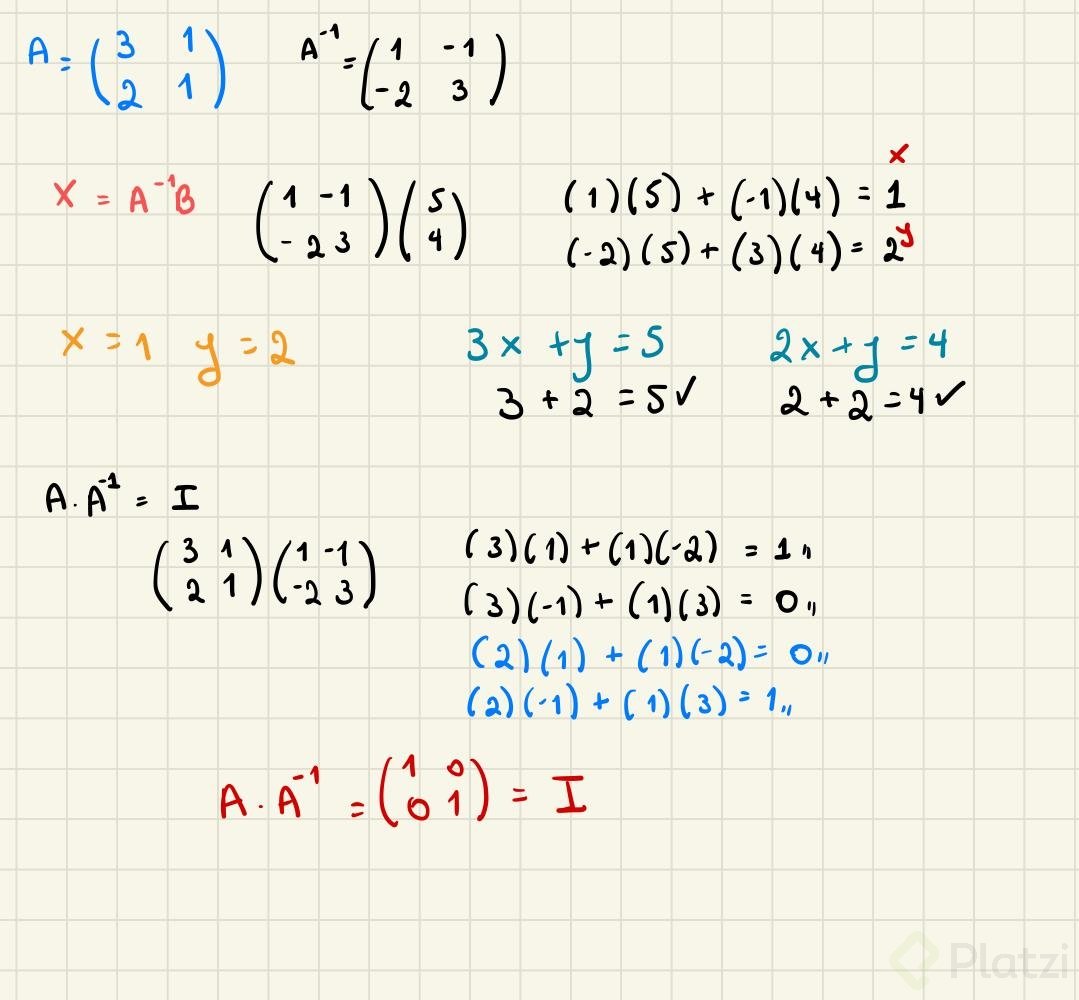
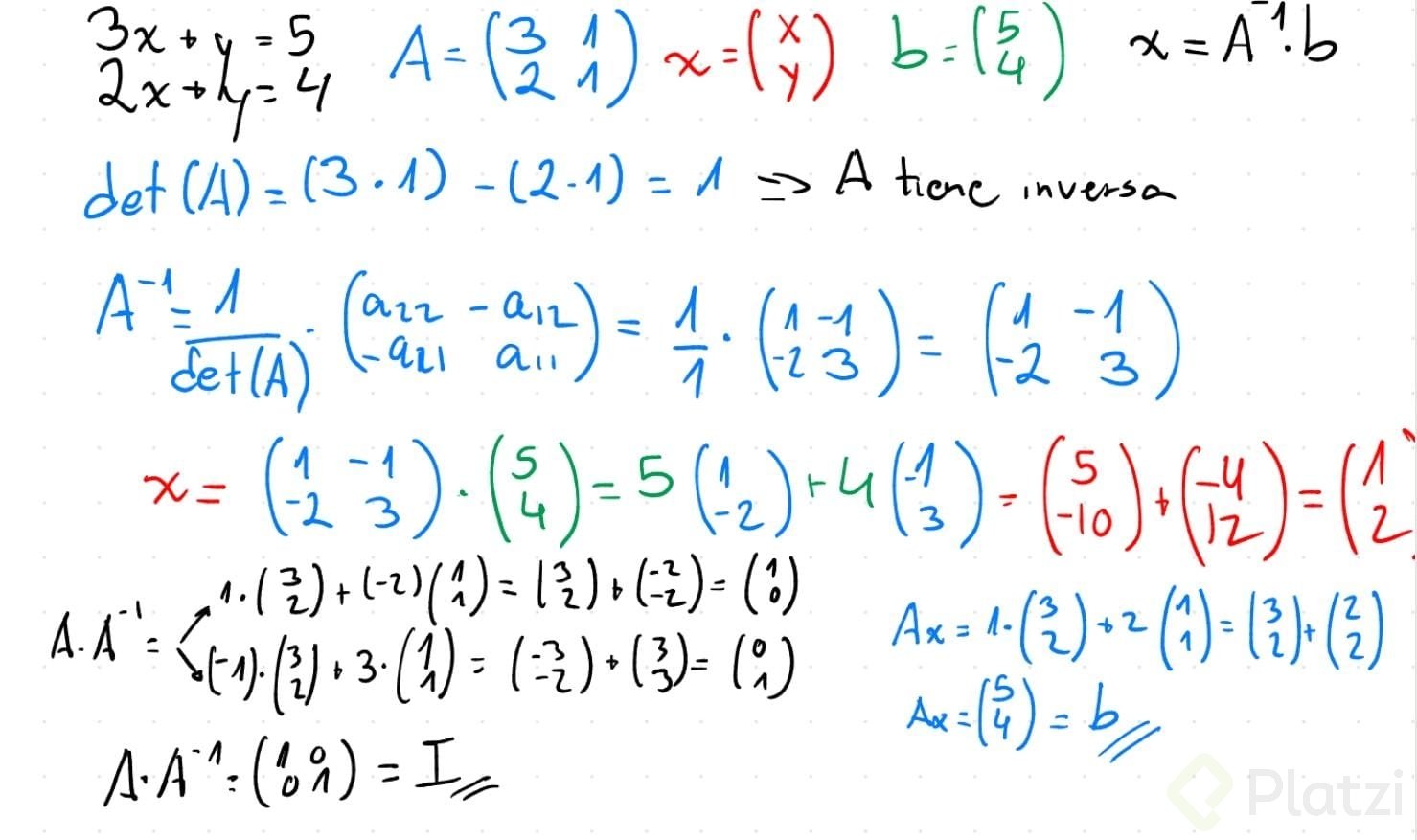
Now combine both tools. The determinant confirms the system has a unique solution, and the inverse gives you that solution through X = A⁻¹ B [6:30].
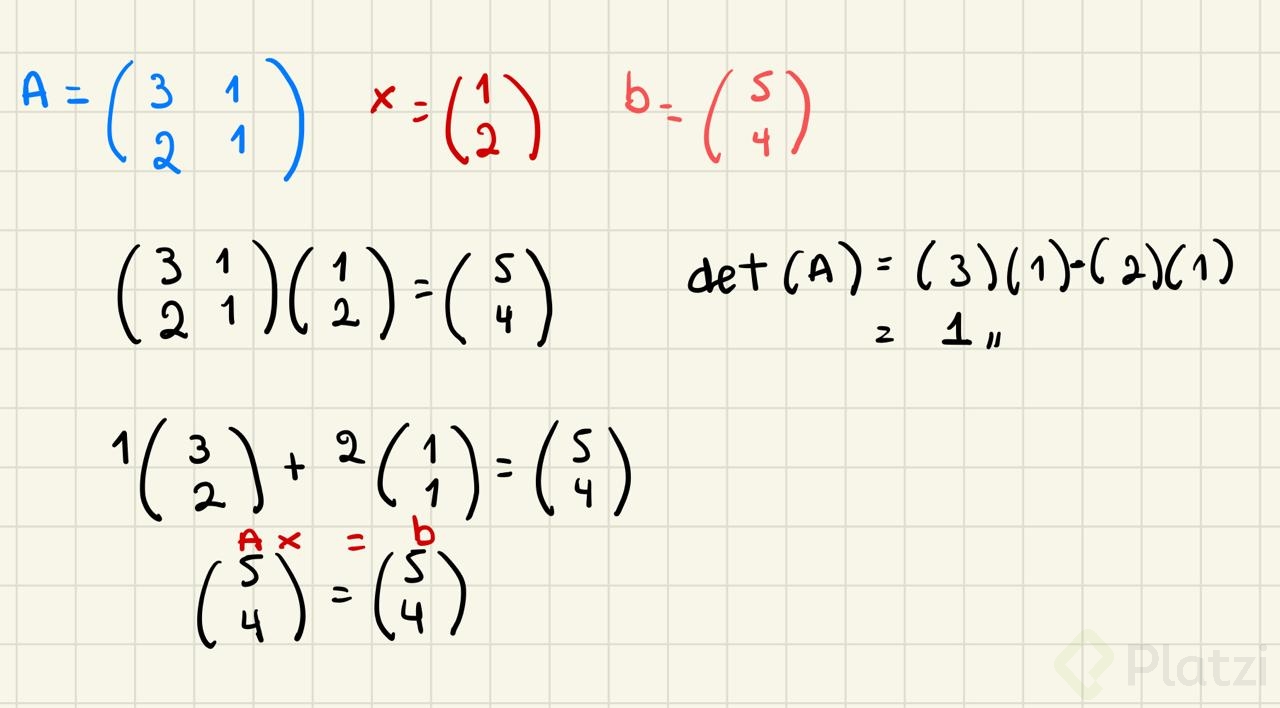
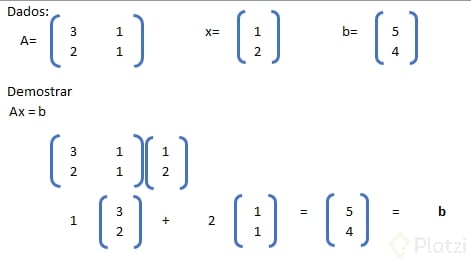
Consider the system 3x + y = 5 and 2x + y = 4. Break it into the Ax = b form:
- A = [[3, 1], [2, 1]] contains the coefficients.
- X = [x, y] contains the unknowns.
- B = [5, 4] contains the results.
The determinant of A is (3)(1) − (1)(2) = 1, so the system has a unique solution. The inverse of A is [[1, −1], [−2, 3]].
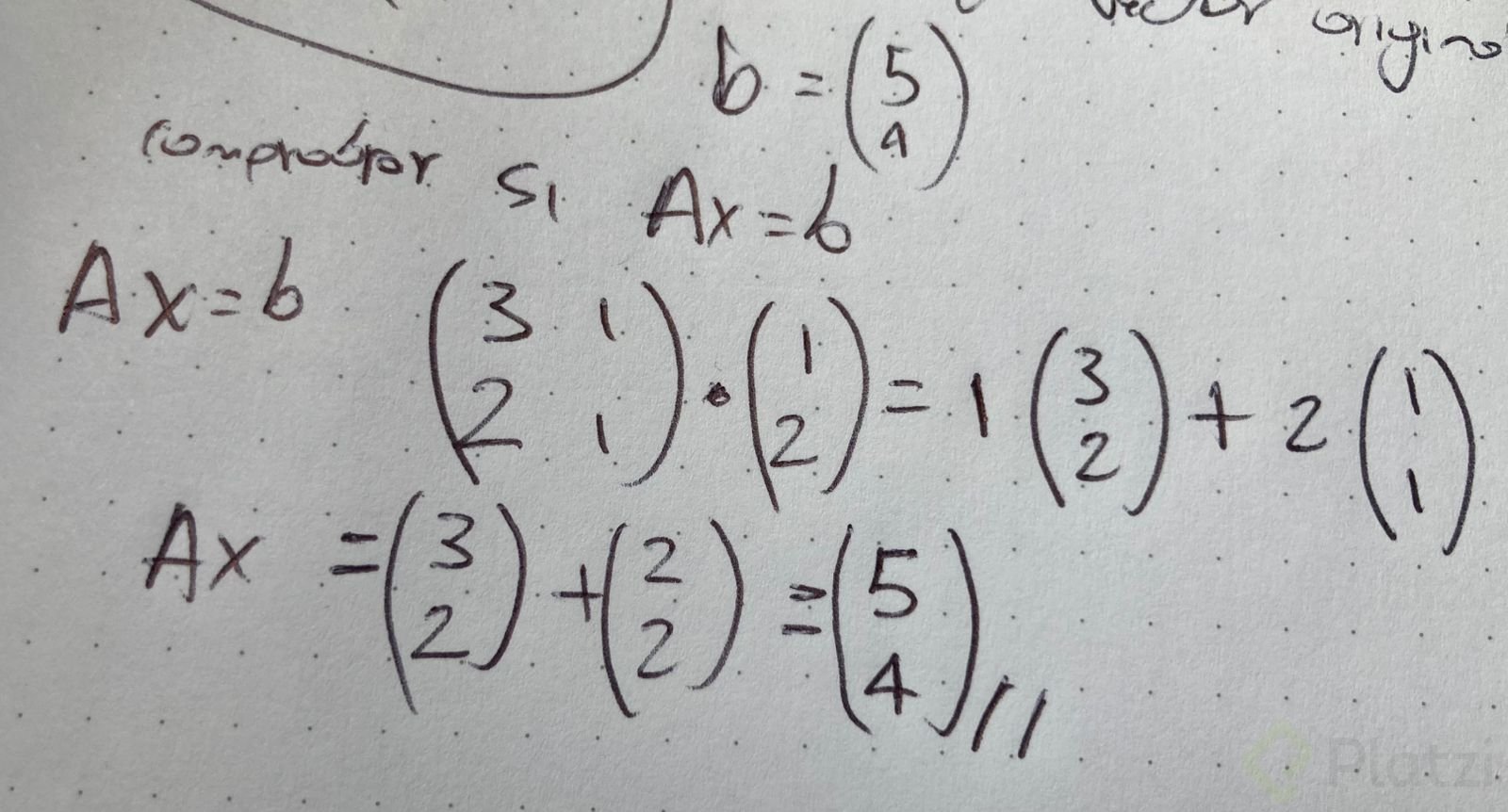
Multiply A⁻¹ by B: the first component is (1)(5) + (−1)(4) = 1, and the second is (−2)(5) + (3)(4) = 2. So x = 1 and y = 2 [8:00]. You just recovered the original vector that A transformed into B.
Try verifying it yourself by multiplying A by X and checking the result equals B. Share your answer in the comments.
What's next after the inverse and determinant?
Until now, you've worked from a single perspective: the standard X and Y axes. But what if you could change your coordinate system to write vectors in a way that simplifies the problem? That's the door we open in the next class.