Solving a system of 10 equations with 10 unknowns by intuition is impossible. You need an algorithm, and Gaussian elimination is the most important tool to solve linear systems of equations in a systematic way. Here you will learn how it works, why it relies on row echelon form, and how back substitution closes the loop.
What is Gaussian elimination and why does it matter?
Gaussian elimination is a systematic process to simplify a system of equations without changing its solution. The goal is to transform the matrix into a much simpler shape called row echelon form [00:38].
A matrix is in row echelon form when it looks like a staircase. The first non-zero element of each row, called the pivot, sits to the right of the pivot in the row above, and everything below each pivot is zero. Once your system has this triangular structure, solving it becomes trivial thanks to back substitution [01:10].
What is a pivot in a matrix? It is the first non-zero number of a row in row echelon form. Pivots define the staircase shape and guide every elimination step.
How do you build the augmented matrix from a system?
Let's work with this 3x3 system [01:30]:
- X + 2Y + Z = 2.
- 3X + 8Y + Z = 12.
- 4Y + Z = 2.
The first step is to create the augmented matrix, written as A | B, where A is the coefficient matrix and B is the result vector [01:55]. You stack the coefficients row by row, draw a vertical bar, and add the results on the right.
[ 1 2 1 | 2 ]
[ 3 8 1 | 12 ]
[ 0 4 1 | 2 ]
This compact format lets you operate on equations and results at the same time, without losing track of either side.
How do you eliminate values below each pivot?
The first pivot is the 1 in row one. Your mission is to turn the 3 right below it into a zero, so the staircase starts forming [02:30].
The operation is: row 2 minus 3 times row 1. Why 3? Because multiplying row 1 by 3 turns its leading 1 into 3, and subtracting that from row 2 cancels the 3 perfectly. After running the math you get:
[ 1 2 1 | 2 ]
[ 0 2 -2 | 6 ]
[ 0 4 1 | 2 ]
Now move to the next pivot, the 2 in row two. The number below is 4, so apply row 3 minus 2 times row 2 [04:00]. The result lands on a clean staircase:
[ 1 2 1 | 2 ]
[ 0 2 -2 | 6 ]
[ 0 0 5 | -10 ]
The last row now isolates a single unknown, which is exactly what you need to start solving.
Why do we want row echelon form? Because it isolates one variable at the bottom, letting you solve it directly and then climb upward to find the rest.
How does back substitution find every variable?
Rewrite the staircase as equations [05:30]:
- X + 2Y + Z = 2.
- 2Y - 2Z = 6.
- 5Z = -10.
Start from the bottom. From 5Z = -10 you get Z = -2. Substitute into the second equation: 2Y - 2(-2) = 6, which gives 2Y + 4 = 6, so Y = 1. Finally, substitute both into the first: X + 2(1) + (-2) = 2, which simplifies to X = 2 [06:30].
The unique solution is (X = 2, Y = 1, Z = -2). This is called back substitution because you replace values moving upward through the system.
What does the solution mean geometrically?
Each equation in the original system represents a plane in three-dimensional space. The point (2, 1, -2) is the only place where the three planes intersect simultaneously [07:30]. That visual intersection is exactly what Gaussian elimination computed algebraically.
This is the geometric proof that the solution is unique: a single point in 3D space, found through a precise sequence of row operations.
What is back substitution used for? It solves a triangular system from the bottom row upward, plugging known values into earlier equations until every variable is determined.
How can you practice Gaussian elimination right now?
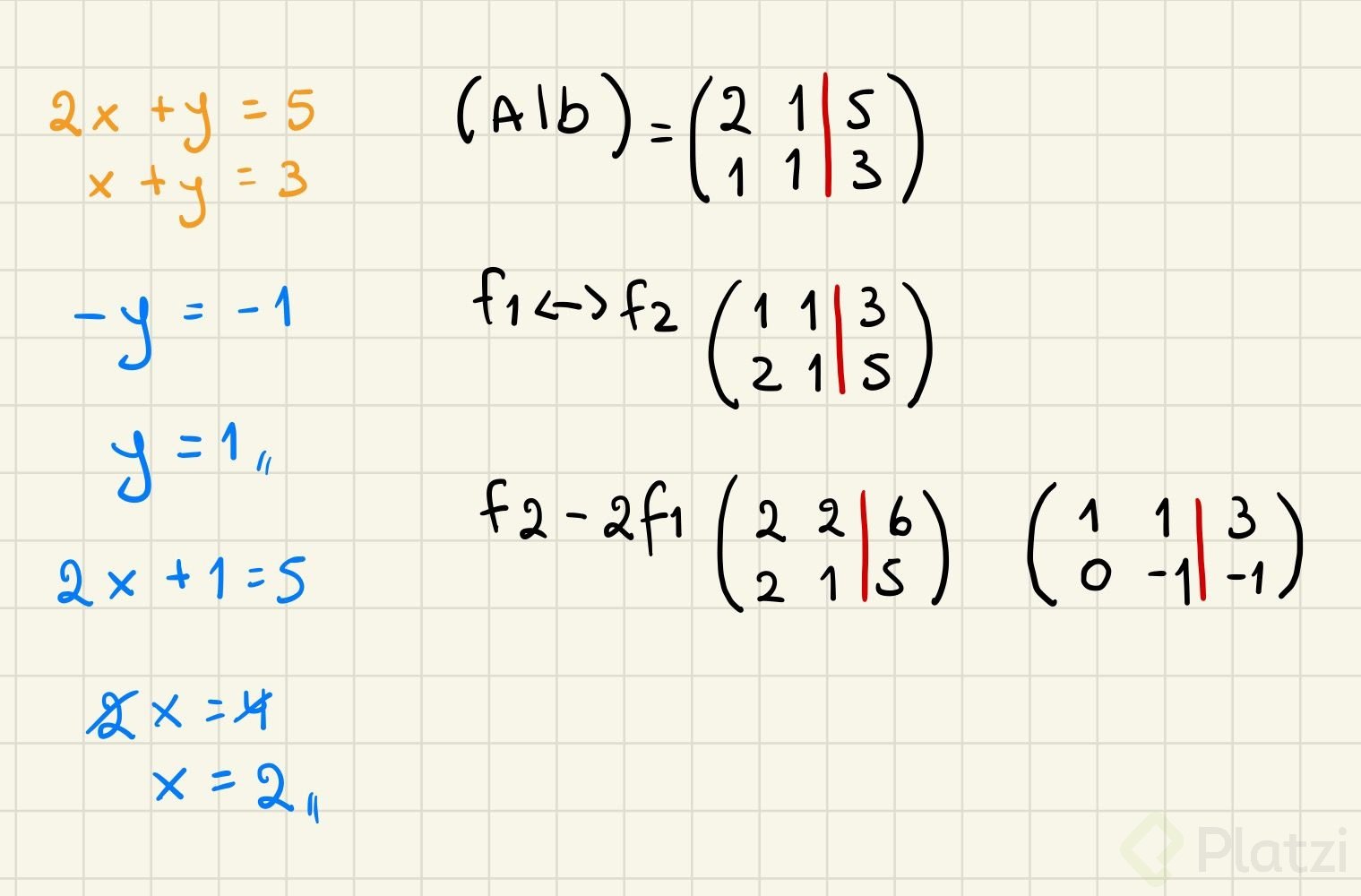
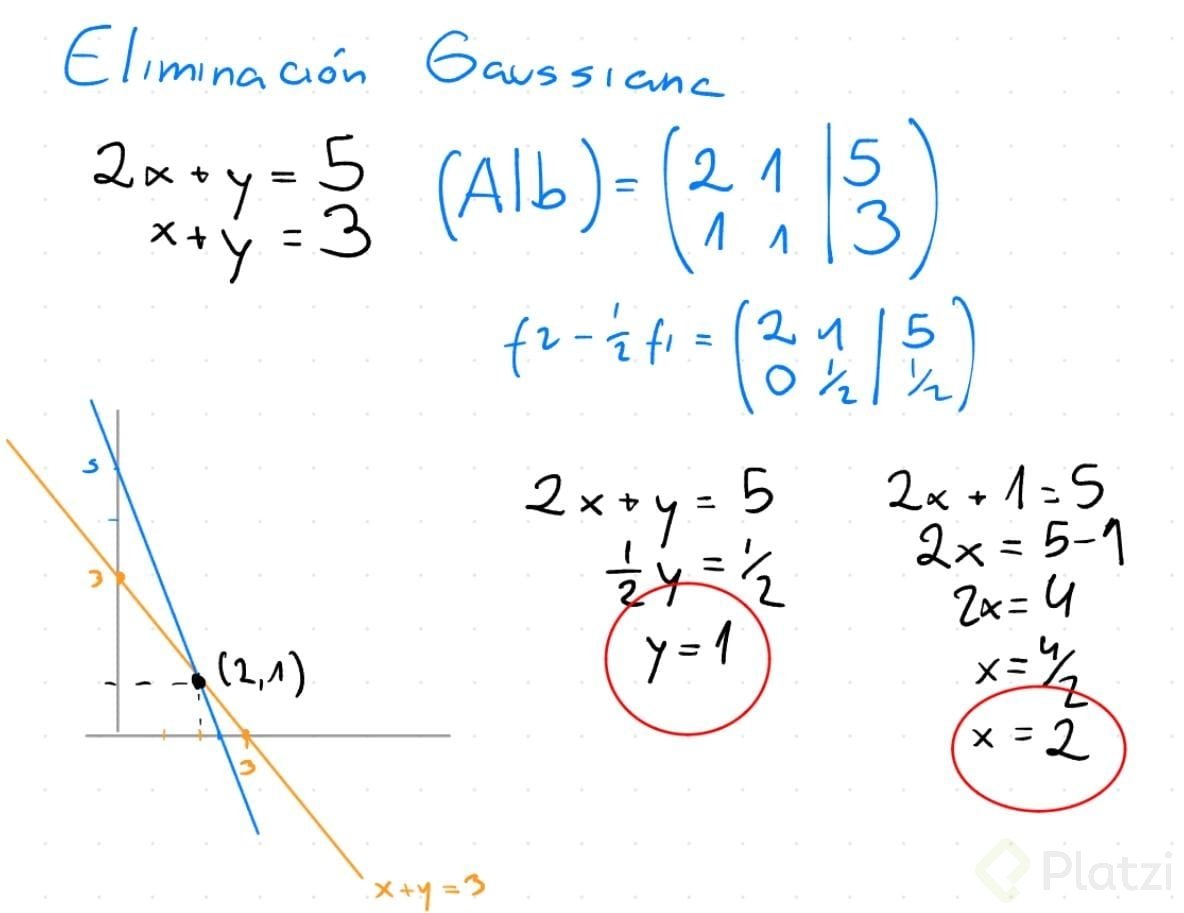
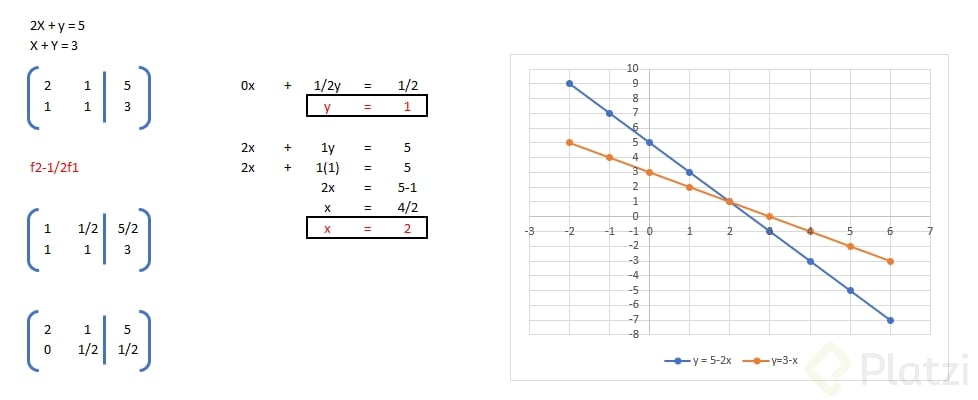
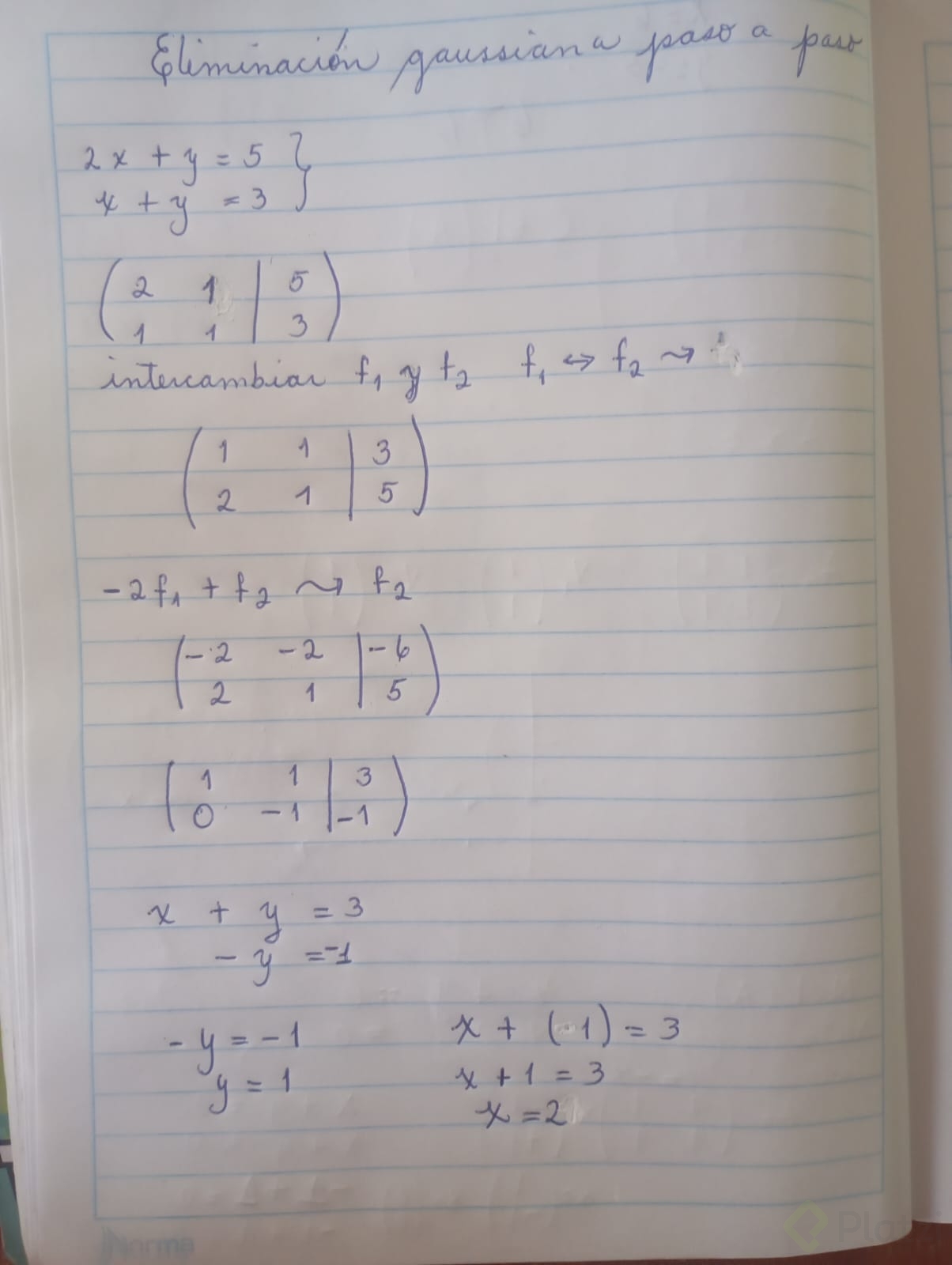
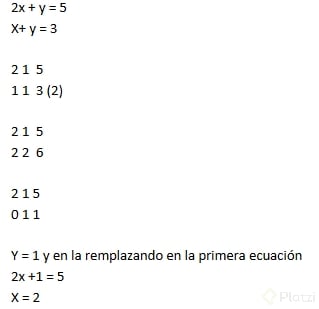
Try this short exercise [08:10]:
Apply the same process you just learned: build the augmented matrix, eliminate below the pivot, reach row echelon form, and use back substitution to find X and Y. Drop your values for X and Y in the comments, and if you want, share your full process so others can compare approaches.
And here is something to keep in mind. While running the elimination you focused on pivots, but did you count them? That number has a name: the rank of the matrix, and it reveals key information about the dimension of your system.